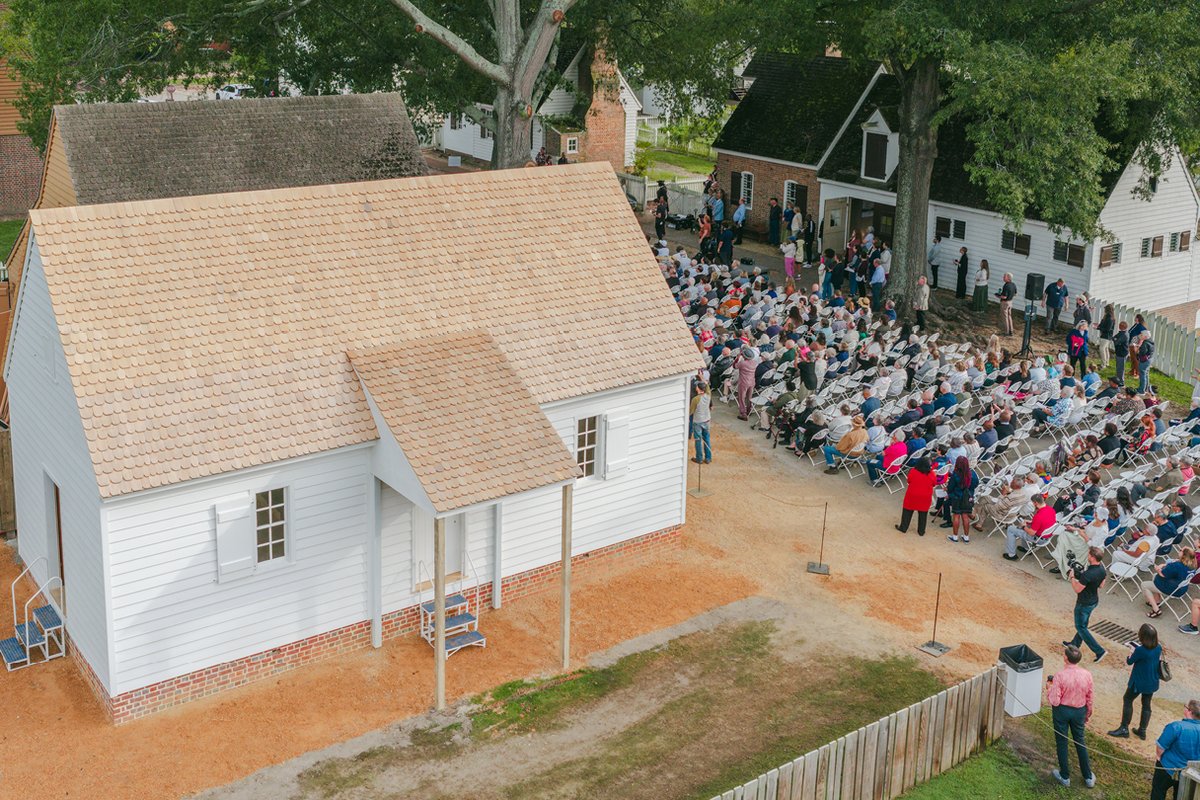
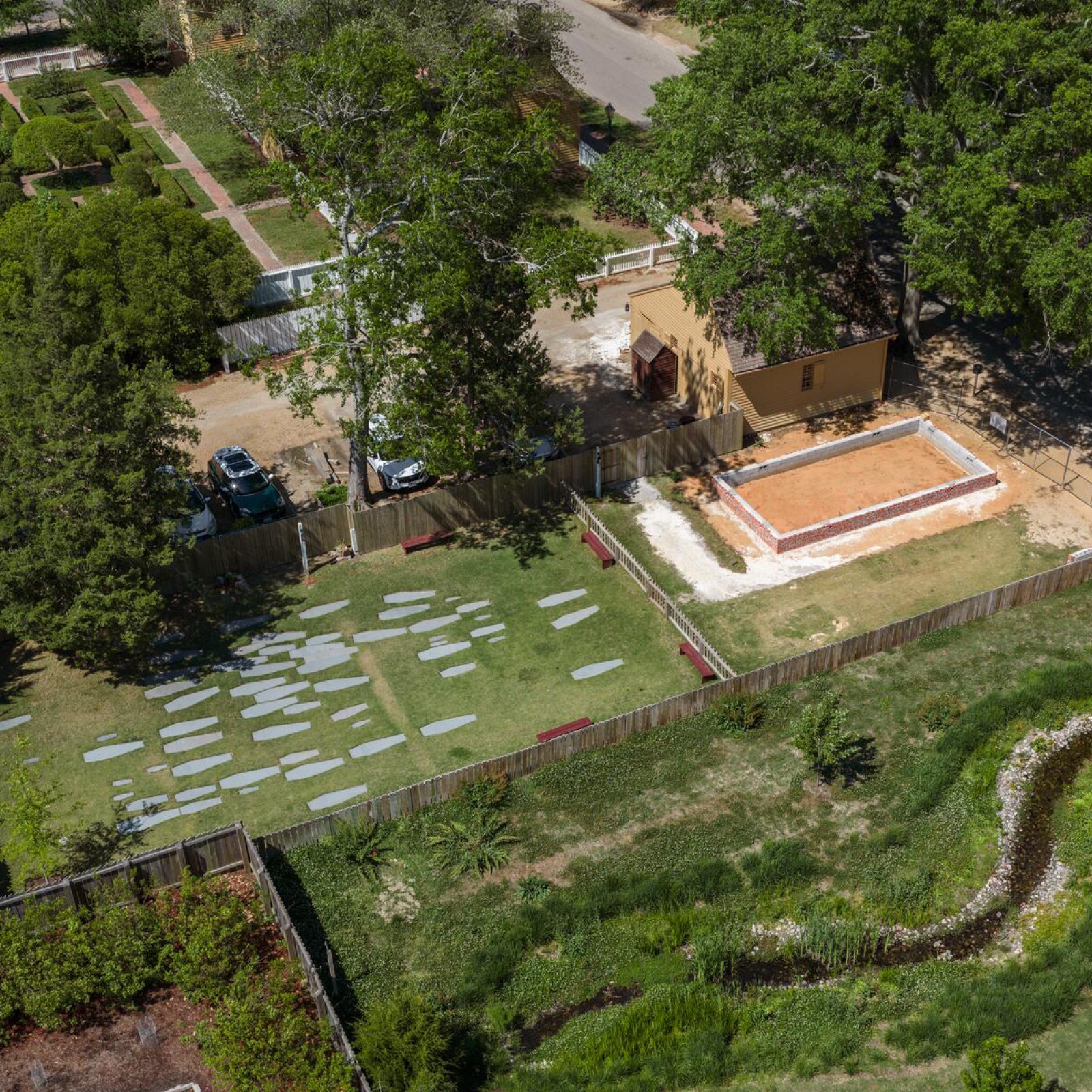
An aerial view of the African Baptist Meeting House Dedication Ceremony held on Nassau Street on the morning of Friday, October 9, 2026.
A Visible Reminder
Reconstructing the African Baptist Meeting House
On the corner of Nassau and Francis Streets, hundreds of enslaved and free African Americans from Williamsburg and the surrounding area gathered every week from around 1805 to 1834. They met at the African Baptist Meeting House, the original permanent location of the First Baptist Church, one of the earliest African American congregations in the United States. A second church opened in 1856 and stood until The Colonial Williamsburg Foundation purchased and removed the building a century later. These structures were visible symbols of the determination, resilience, and community of Williamsburg’s Black residents.
In 1957, archaeologists at Colonial Williamsburg excavated the Meeting House site. Since no eighteenth-century structures were found, this first excavation was short-lived. In recent years, The Colonial Williamsburg Foundation, the First Baptist Church, and the Let Freedom Ring Foundation have worked to reconstruct the original African Baptist Meeting House on Nassau Street. Descendants, archaeologists, architects, and historic tradespeople have worked diligently to return Black history to the landscape.
Archaeological Research
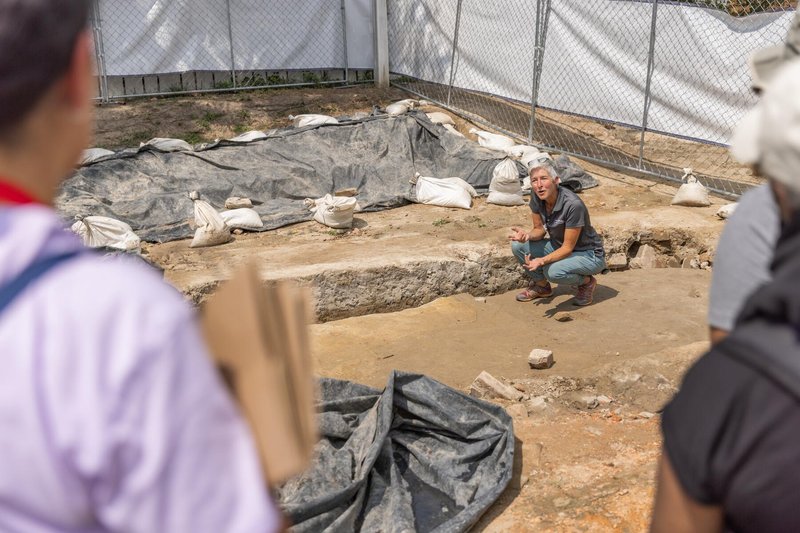
Meredith Poole, interviewed here, instructs teachers at the African Baptist Meeting House site.
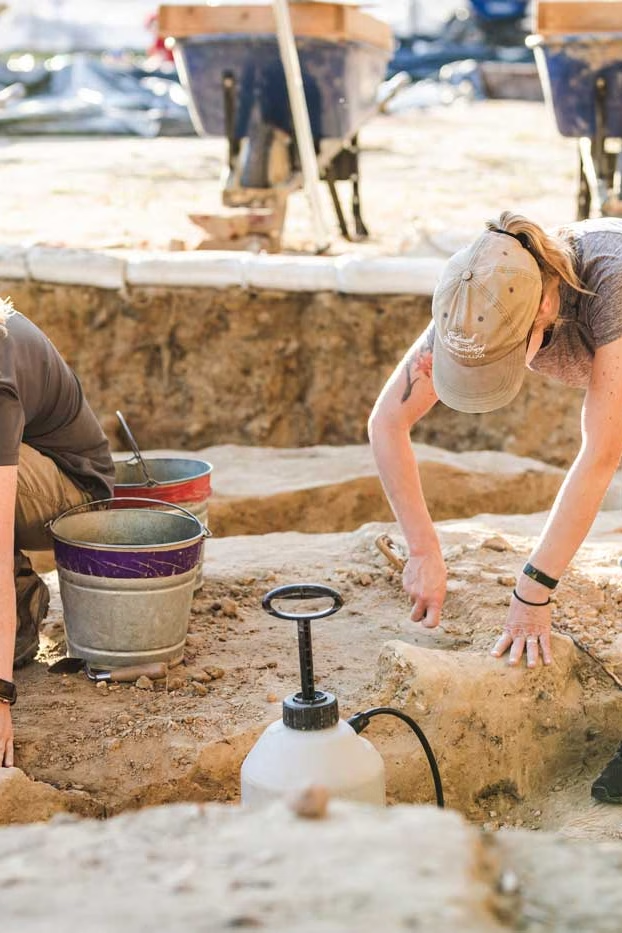
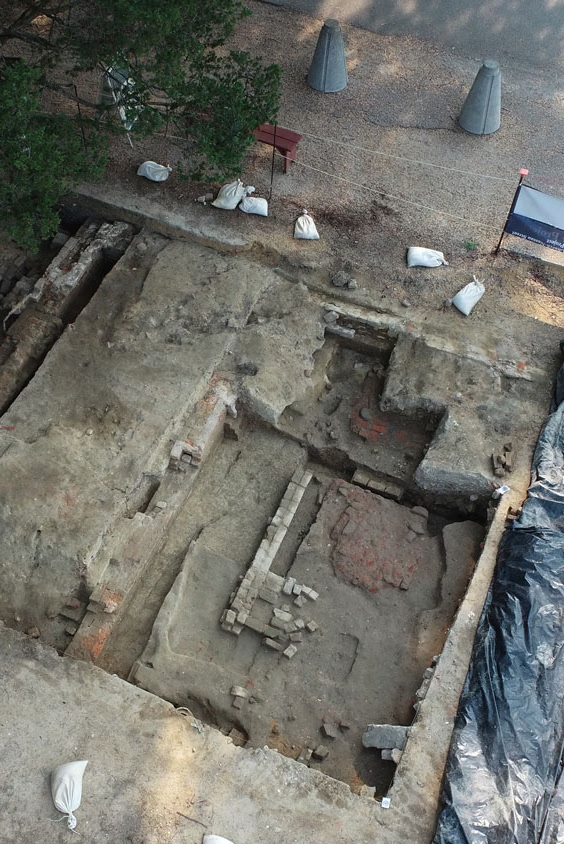
After the 1957 excavation, archaeology began again in 2020 with the goal of finding the first church structure and rebuilding it in partnership with the local descendant community. Through community meetings, open houses, and ceremonies, descendants shared their knowledge at every stage of the archaeology process.
This was more than just a building. The discovery of a burial ground associated with the church focused the descendant community and archaeologists on human aspects of this story. At the request of descendants, three of the sixty-two graves discovered were excavated and studied by archaeologists.
To be able to excavate a piece of a lot – an eighth of an acre – where, prior to Emancipation, Williamsburg's Black residents made all the decisions ... It gives us a different vantage point.
— Meredith Poole, Senior Archaeologist, Colonial Williamsburg
Archaeologists also set out to learn more about the congregation, recovering food remains that spoke to communal and celebratory meals as well as straight pins and buttons, which illustrate the clothing of congregants. In a pioneering sound study, the archaeology team showed that the voice of a preacher like Gowan Pamphlet could be heard by hundreds of people from the doorway of the church. This discovery lends support to the fact that the congregation numbered over 500 people by the early nineteenth century.
The sound study also showed that the burial ground was built on high and flat land where it was difficult to hear the preacher. As owners of the property, the congregation was able to use each portion to its best advantage, reserving a dedicated burial ground where the remains of ancestors were respected. Analyzing this site has allowed the archaeologists to see life in Williamsburg in a new way and return a fundamental piece of Black history to the narrative.
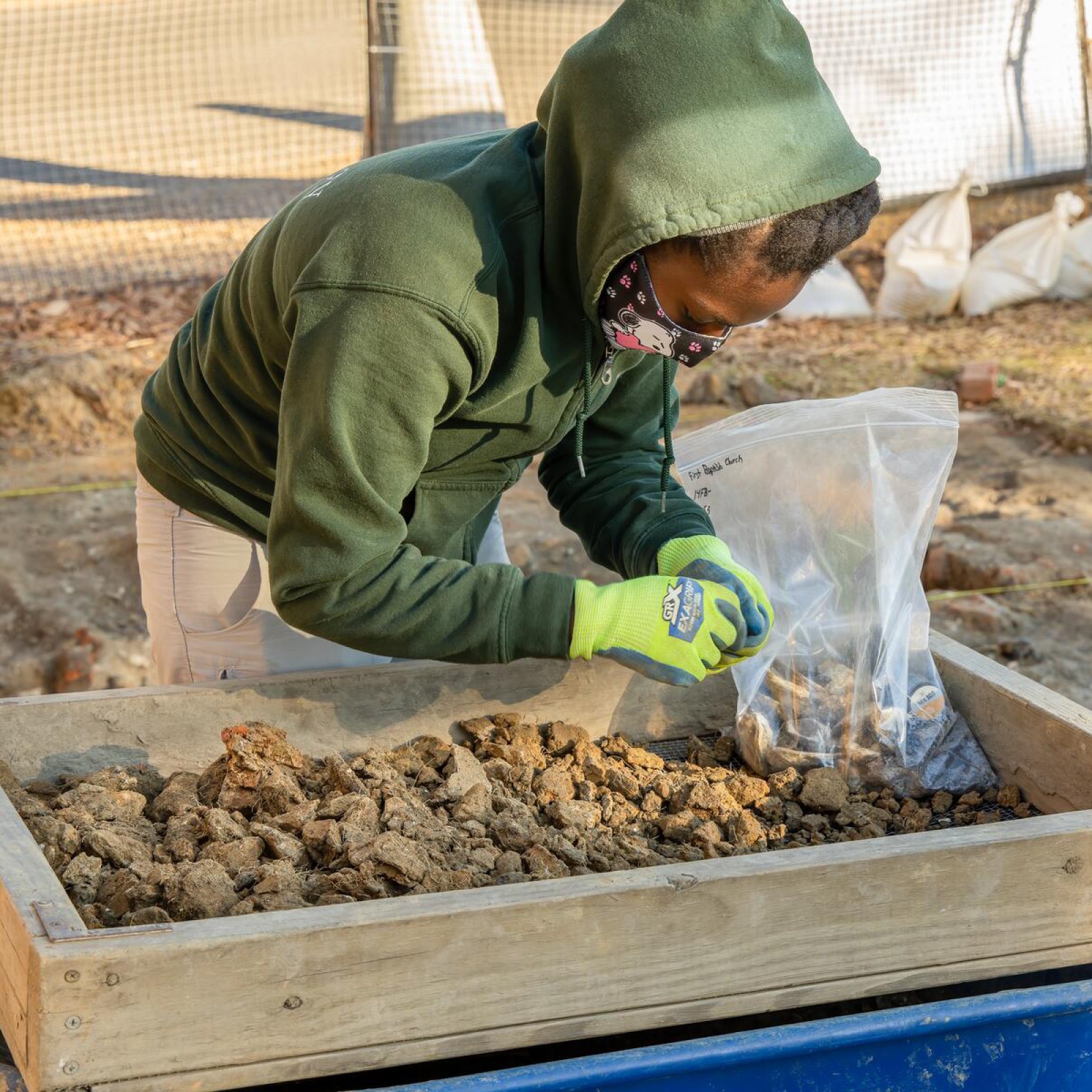
Unearthing Past Lives
Archaeology Collections Manager Katie Macbeth said archaeologists unearthed 282,712 artifacts at the site, from “Native American artifacts all the way up to a 1996 Olympics Busch Gardens pin.”

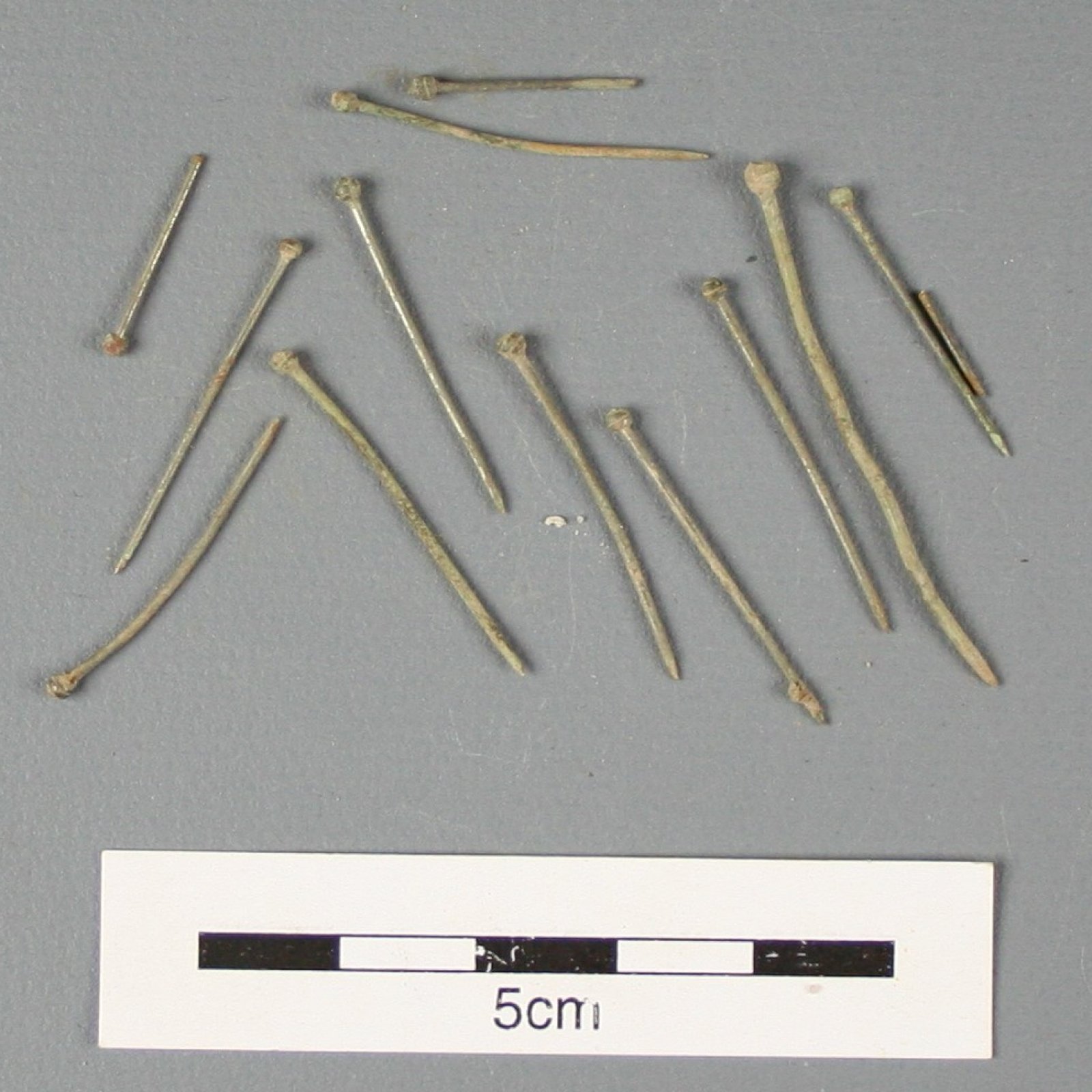
Straight Pins
Like many Christians, Black Baptists tried to dress their best for church. Straight pins like the ones shown here were an important part of Sunday clothes and served to fasten both women’s and men’s clothing.
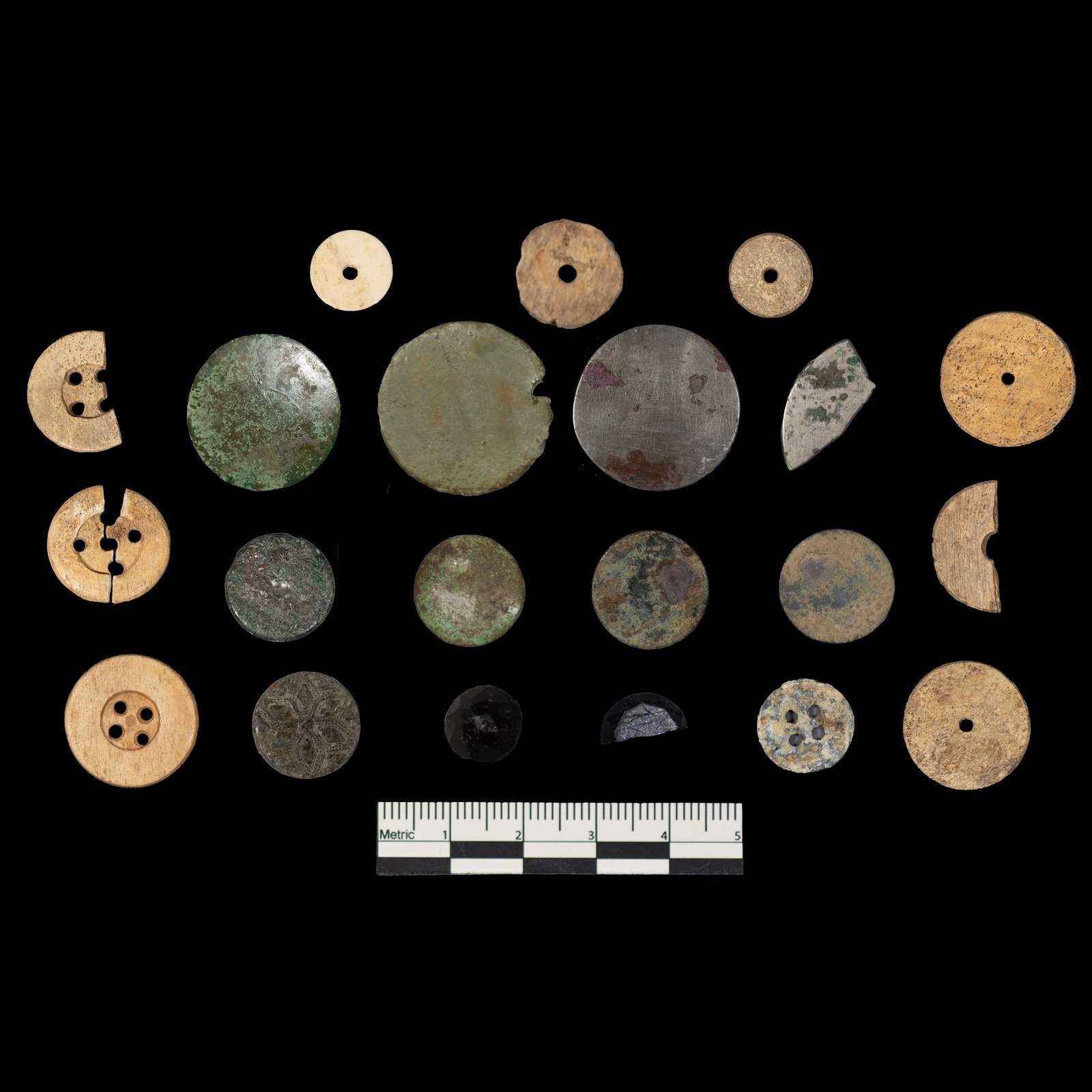
Buttons
Archaeology can tell us a great deal about change over time. As buttons replaced straight pins in the early 1800s, they began to show up in soil samples from later periods. These buttons from the First Church were made of wood, metal, and glass.
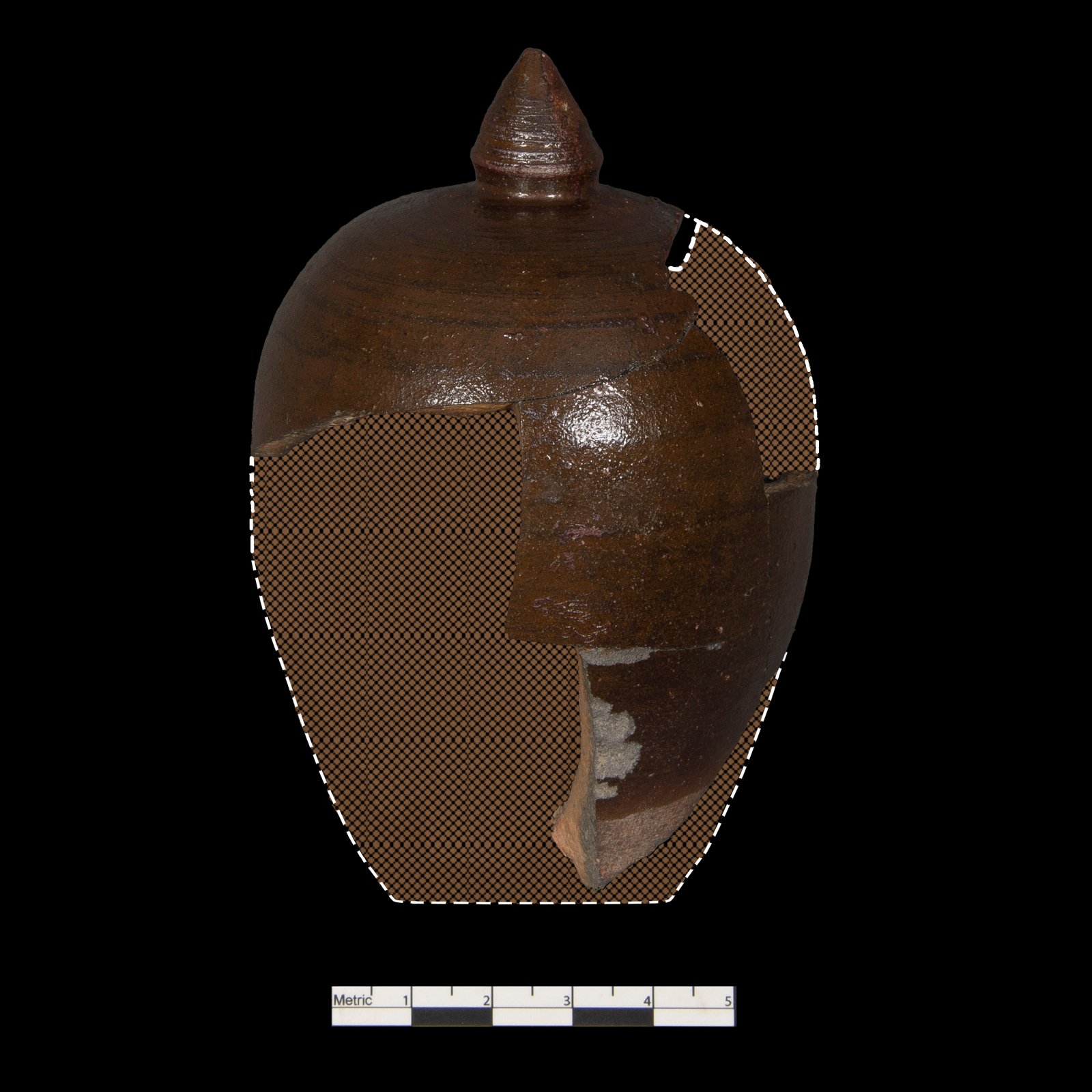
Money Jugs
Money jugs, like the partially reconstructed one shown here, have been used since Roman times to collect or save money by both individual and local institutions. Sherds from 15 broken stoneware containers were found on the site and were likely used by congregants to fund the church or support other members.
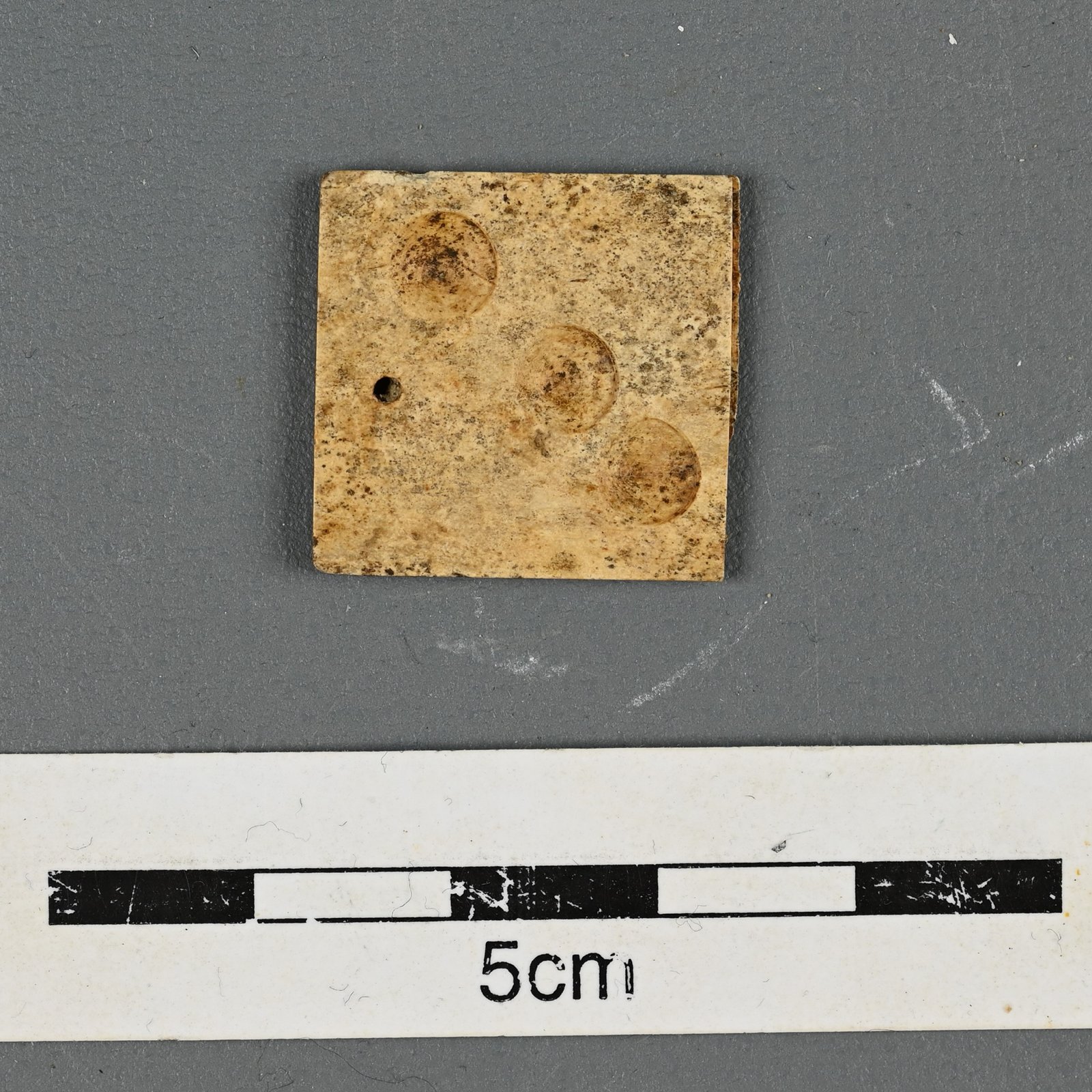
Children's Items
Attending church was a family affair. Archaeologists found a sizeable collection of children’s items including slate pencils, clay marbles, and the domino shown here. The children who brought these items to the Meeting House would become the second generation of the congregation.
Reconstructing the Meeting House
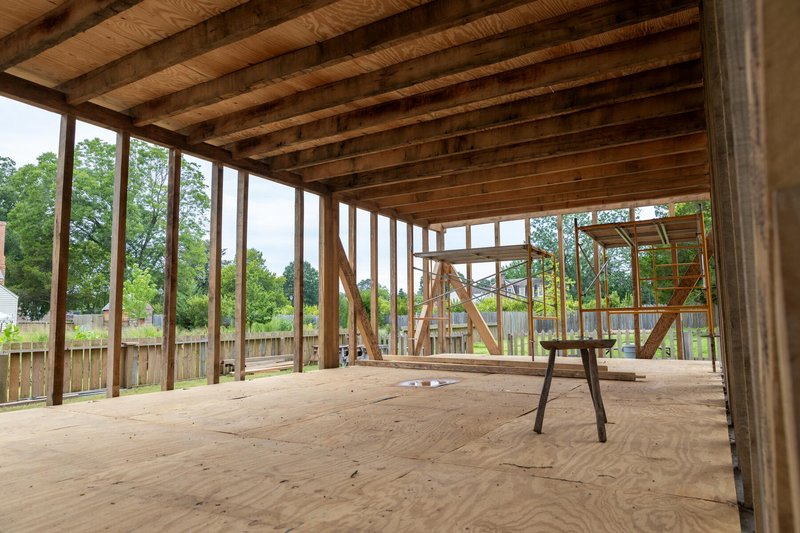
Interior of African Baptist Meeting House under construction, before the wooden siding is installed.
Colonial Williamsburg’s Architectural Preservation and Research Department restores and preserves the buildings in the Historic Area. According to Jennifer Wilkoski, the Director of the Grainger Department of Architectural Preservation and Research, preservationists carried forward a mission from their work on the Bray School reconstruction to bring “a visible reminder to the landscape for people to understand the experiences of the enslaved and free black community here in Williamsburg.” The Architectural Preservation team consulted descendants, the archaeological record, and surviving Black churches to bring this visible reminder to life.
There's a really, really deep, deep history here that people are tying into. And I think that that makes this project even more special in a way.
— Jennifer Wilkoski, Director of Architectural Preservation and Research
Archaeologists had discovered that many of the materials in the original construction had been recycled. Other Black churches from the period recycled things like windows, doors, and building boards from other structures. The Architectural Preservation team has continued this practice and has reused quality materials made by Colonial Williamsburg’s Historic Trades in their reconstruction. Wilkowski said that the reuse of materials is “showing the resourcefulness of the congregation.”
Jennifer Wilkoski, much like Meredith Poole, observed that the African Baptist Meeting House was a special part of the landscape of Colonial Williamsburg because it is so intimately connected with local and national descendant community. Wilkoski said that the reconstruction is “more than just rebuilding a building. This is a way to tell stories of people whose stories were not told for a long time.”
Historic Trades in Action
In addition to archaeologists and architects, brickmakers, joiners, and bookbinders, and other historic trades played a key role in bringing the African Baptist Meeting House back to life.

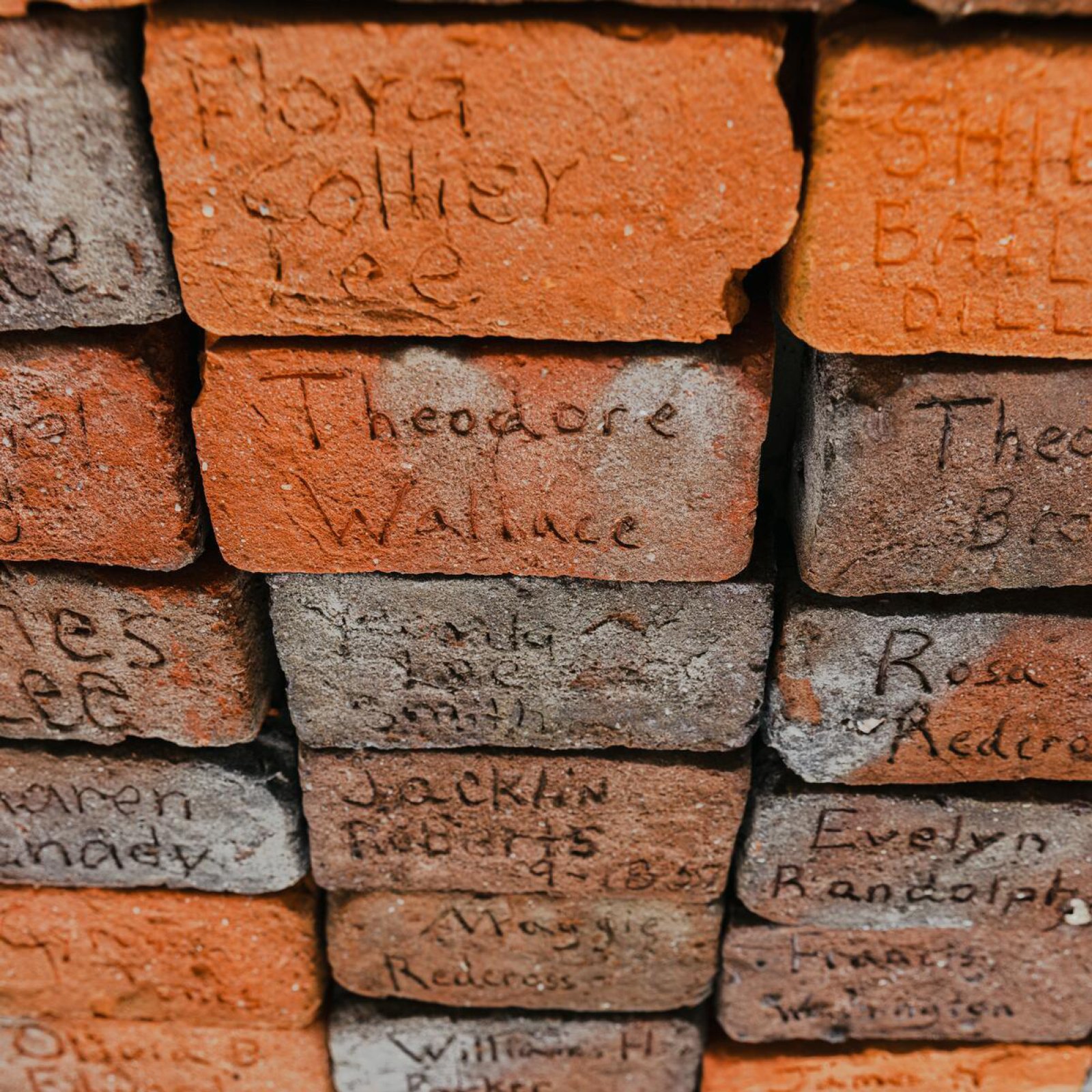
Bricks for the Meeting House
Members of the First Baptist and other daughter churches carved their names into roughly 7,000 bricks used in the Meeting House’s construction. The people and stories of the African Baptist Meeting House are a reminder that the story of this congregation and its impact continues.
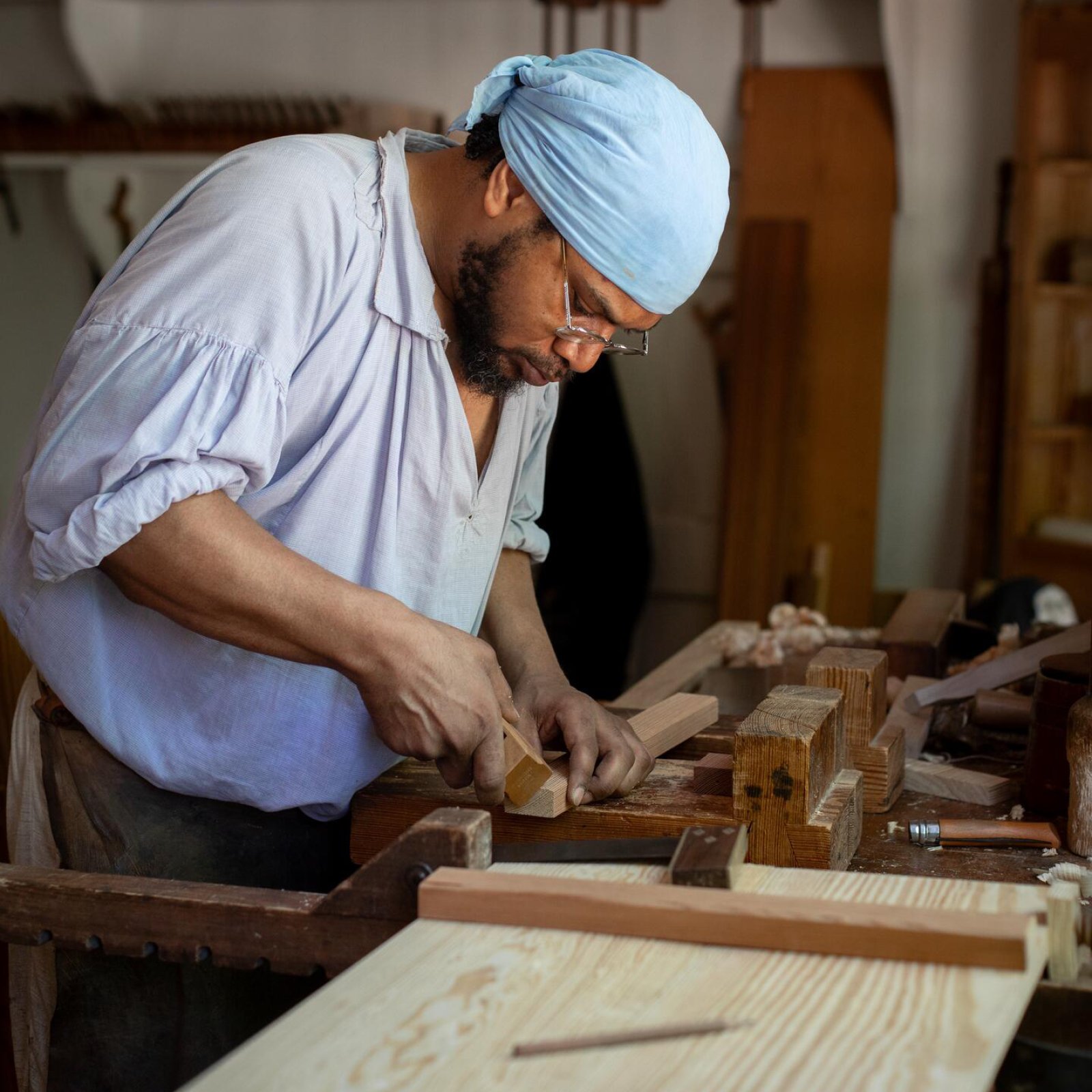
Furnishing a Congregation
The joinery created new furniture for the space, using local yellow pine to create 13 benches and an altar table. Historic tradespeople modeled these pieces on furnishings found at Mauck’s Meetinghouse in Hamburg, Virginia, and items in Colonial Williamsburg’s collections.
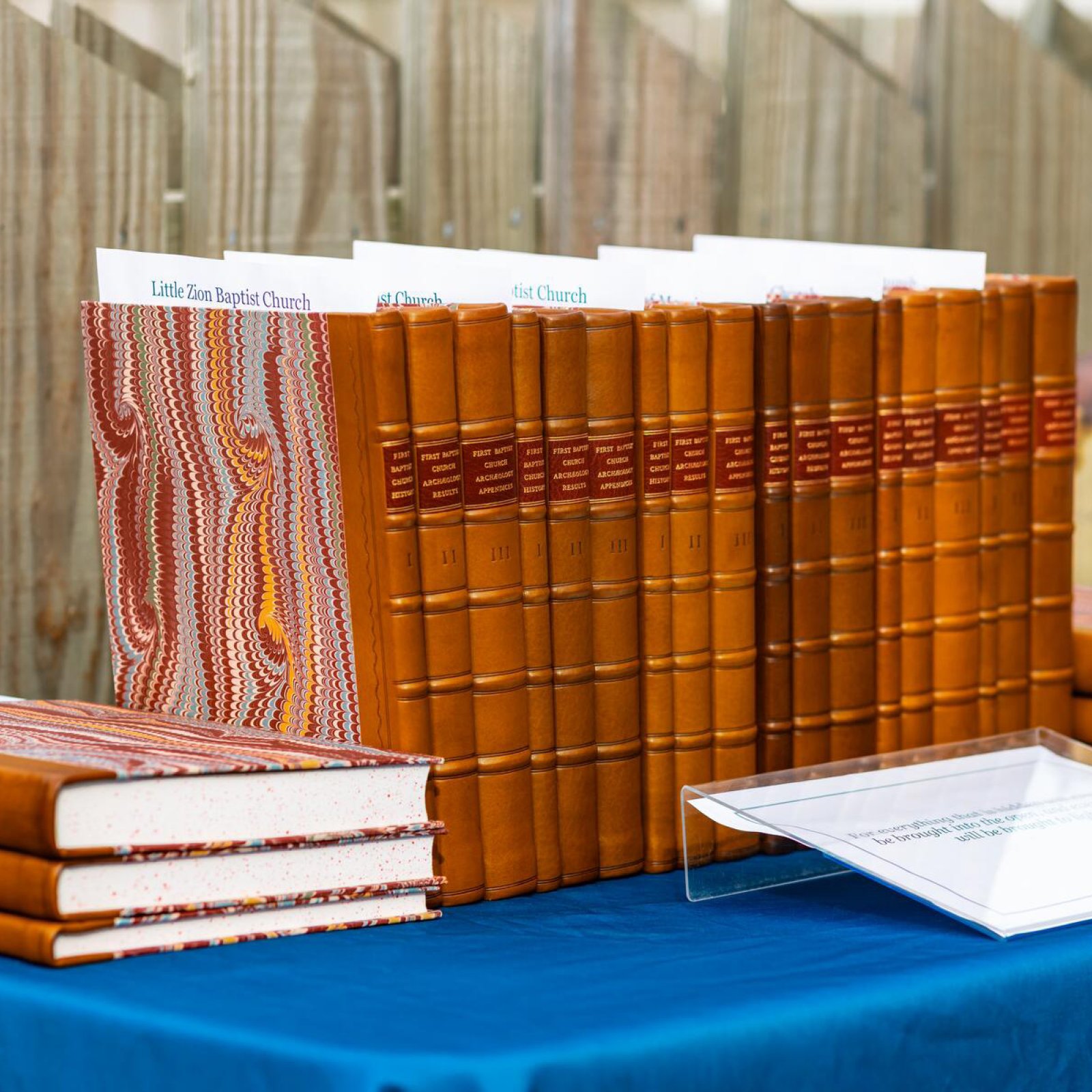
Books for Descendants
The bookbinders expanded on the relationship between archaeologists and the descendant community by binding eight, three-volume sets of books about archaeological research and evidence as gifts from the Archaeology Department to First Baptist Church and seven daughter churches.
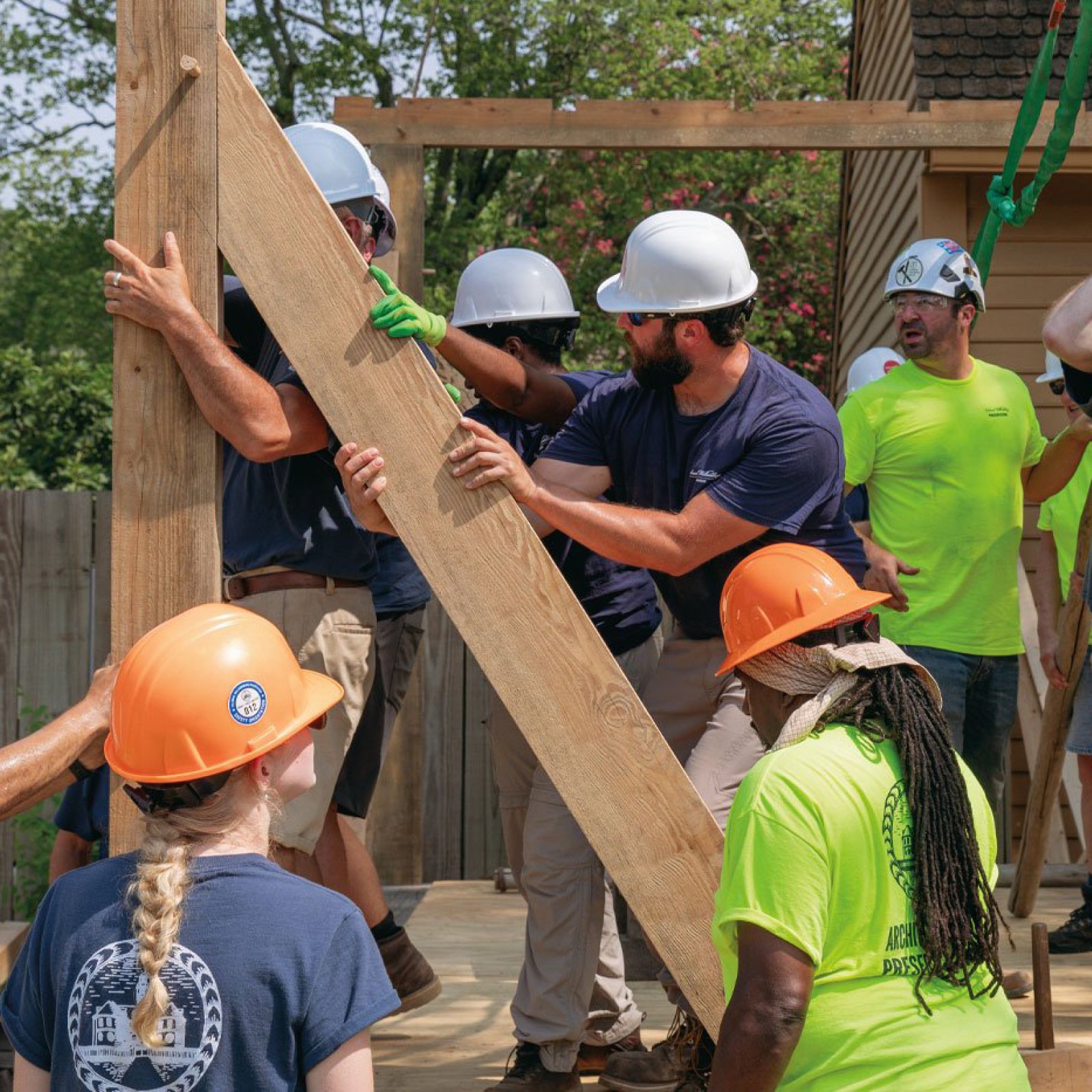
Building a Framework
Colonial Williamsburg’s carpenters were responsible for the construction of the building itself, creating the framework, raising the frame, and installing the roof, floor, and siding. The flooring and siding began as 24 large square timbers, which were pit sawn and left to dry for a full year before use.
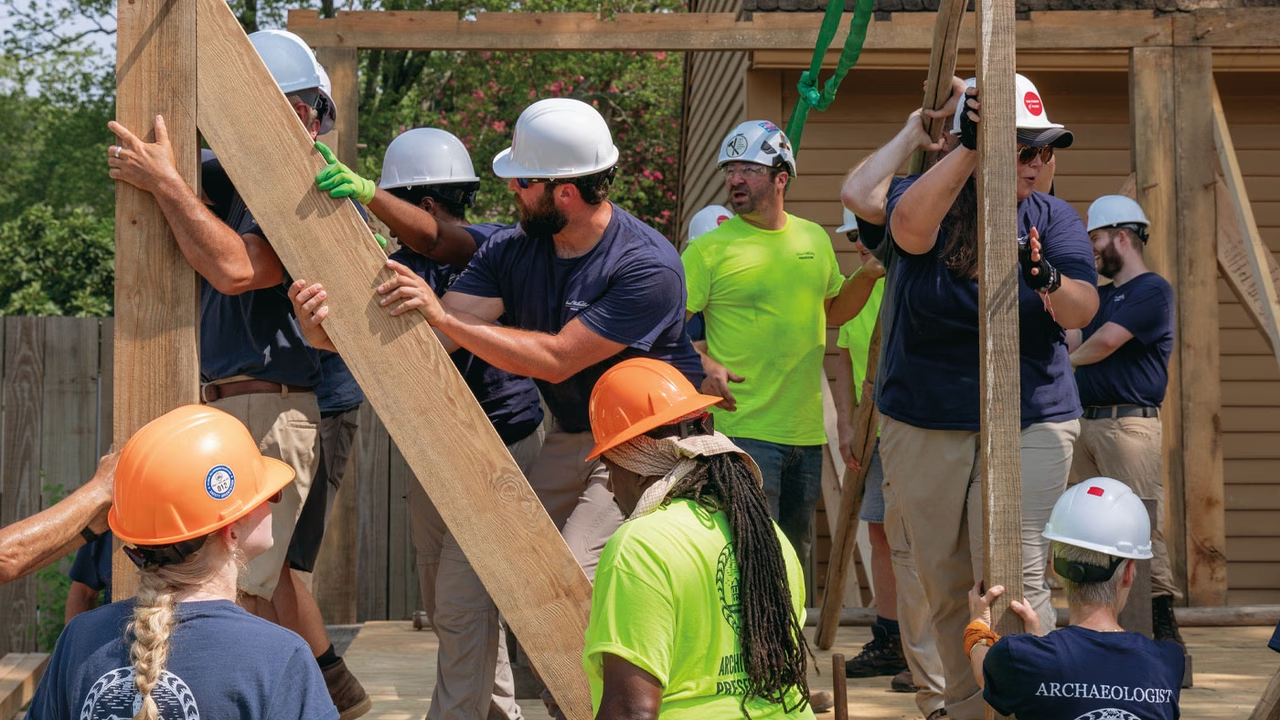
Raising the African Baptist Meeting House
Raising the African Baptist Meeting House