Junior Historians Exploration Quest
Quick Links
What was everyday life like 250 years ago?
This exploration quest through Colonial Williamsburg’s Historic Area will allow you to explore how people lived in the past. See if you can find at least 7 of these places.
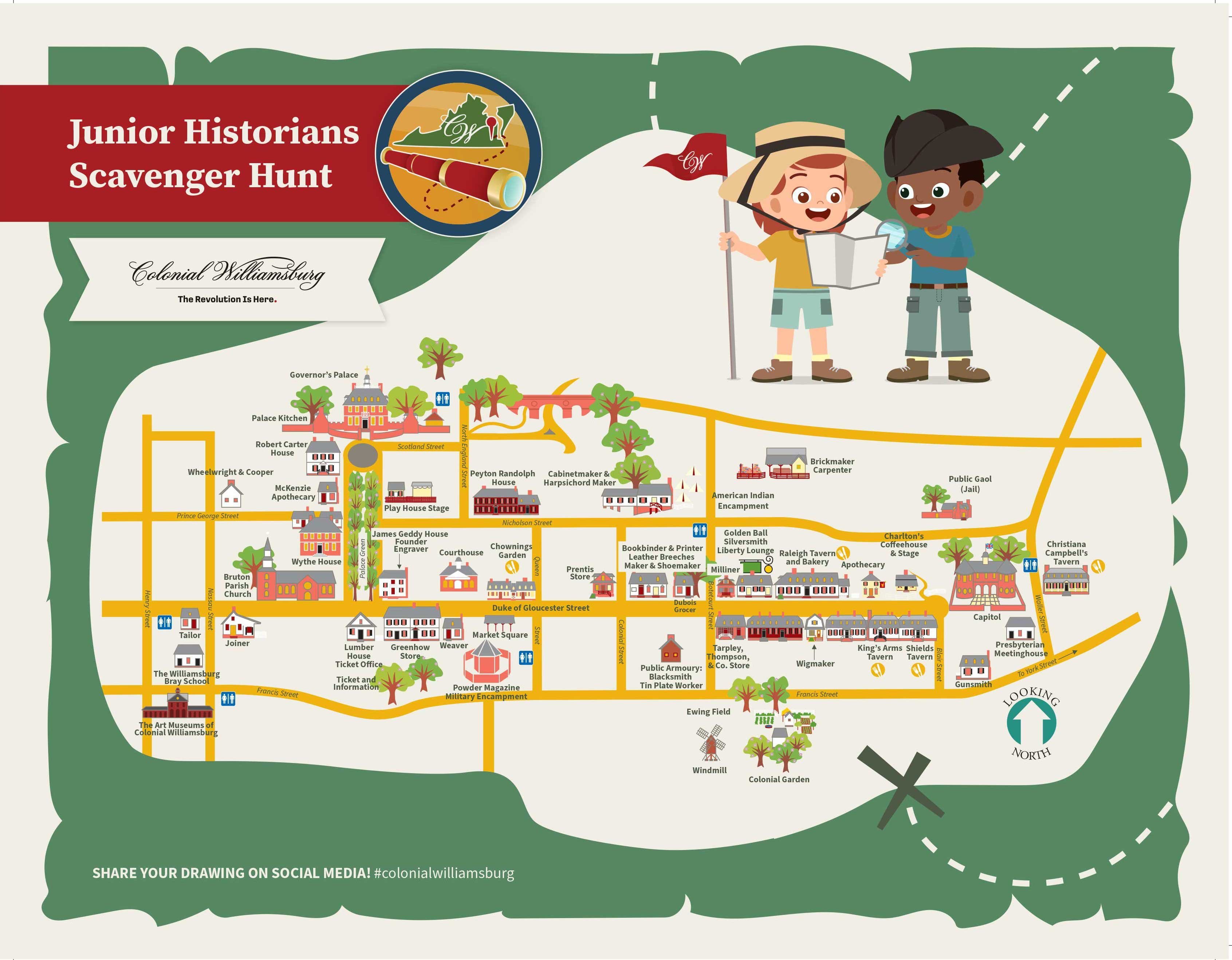
Find a place where:
- Where did people sleep?
- Answers: Governor's Palace Property, Peyton Randolph Property, George Wythe Property , James Geddy Property, Raleigh Tavern, American Indian Encampment, Military Encampment
- Fun fact: Enslaved people usually didn't sleep in a property's main building. Instead, many slept in small, separate buildings known as "outbuildings," such as kitchens, dairies, and stables.
- Where did people go to the bathroom?
- Answers: Governor’s Palace Property, Peyton Randolph Property, George Wythe Property, Geddy Property, Raleigh Tavern, Williamsburg Bray School, Charlton's Coffeehouse
- Fun fact: Look out for chamber pots, which were bowls or buckets designed as portable toilets, used before modern sanitation.
- Where did people eat?
- Answers: Governor's Palace, Governor's Palace Kitchen, Peyton Randolph Property, George Wythe Property, Raleigh Tavern, American Indian Encampment, Williamsburg Bray School, Charlton's Coffeehouse, Kings Arms Tavern, Shields Tavern, Christiana Cambell’s Tavern
- Fun fact: In early America, the main meal of the day was dinner, served in the midafternoon.
- Where did people make things?
- Answers: All trade sites, American Indian Encampment, Military Encampment
- Fun fact: Many young children in Virginia apprenticed in 18th-century trades, often beginning as young as 8 years old.
- Where did people learn?
- Answers: All trade sites, Williamsburg Bray School, Governor's Palace, George Wythe Property, Peyton Randolph Property, James Geddy Property, Raleigh Tavern, Coffeehouse, American Indian Encampment.
- Fun fact: Thomas Jefferson attended the College of William & Mary in Williamsburg but never graduated.
- Where did people grow things?
- Answers: Ewing Field, Colonial Garden, Governor's Palace garden, Williamsburg Bray School, Peyton Randolph House Garden, George Wythe House Garden, Geddy House Garden.
- Fun fact: Around 90% of people in early Virginia, including enslaved people, lived and worked on farms.
- Where did people cook food?
- Answers: Peyton Randolph House Kitchen, King’s Arms Tavern, Christiana Campbell’s Tavern, Shields Tavern, Raleigh Tavern, Palace Kitchen, Wythe House Kitchen.
- Fun fact: Many of the meals people consumed in the 1700s were stews cooked in a single pot over an open flame.
- Where did people shop?
- Answers: All trade sites, Prentis Store, Tarpley Thompson & Company Store, Golden Ball, Market House, John Greenhow Store, William Pitt Store
- Fun fact: Because tobacco dominated colonial Virginia’s economy, people often listed the price of goods in terms of pounds of tobacco.
- Where did people meet and talk with each other?
- Answers: Charlton’s Coffeehouse, Raleigh Tavern, Governor’s Palace, The Williamsburg Bray School, American Indian Encampment, African Baptist Meeting House, Presbyterian Meeting House, King’s Arms Tavern, Shields Tavern, Christiana Campbell’s Tavern, Market House, Capitol, Courthouse.
- Fun fact: Taverns were one of the key social hubs in colonial America, providing a space for eating, drinking, playing games, and clubs.
- Where did people play games?
- Answers: Governor’s Palace Property, George Wythe Property, Geddy Property, Peyton Randolph Property, Raleigh Tavern, Charlton’s Coffeehouse, The Williamsburg Bray School, American Indian Encampment.
- Fun fact: Enslaved children sometimes rolled and played with their own clay marbles.
What to do when you finish?
Have you checked off 7 items from the scavenger hunt? Congratulations, you’re a Junior Historian! Go to any ticket office (Visitor Center, Lumber House, Art Museum, or a hotel desk) to claim your prize.
Draw What You Found!
Draw something that you saw during the scavenger hunt! Share the drawing on social media with the hashtag #cwjuniorhistorian We might share your drawing on our page!
Tell us what you think?
Additional Resources
Bring history to life with our multimedia resources, including games, videos, interactive timelines, and more.
What the Huzzah
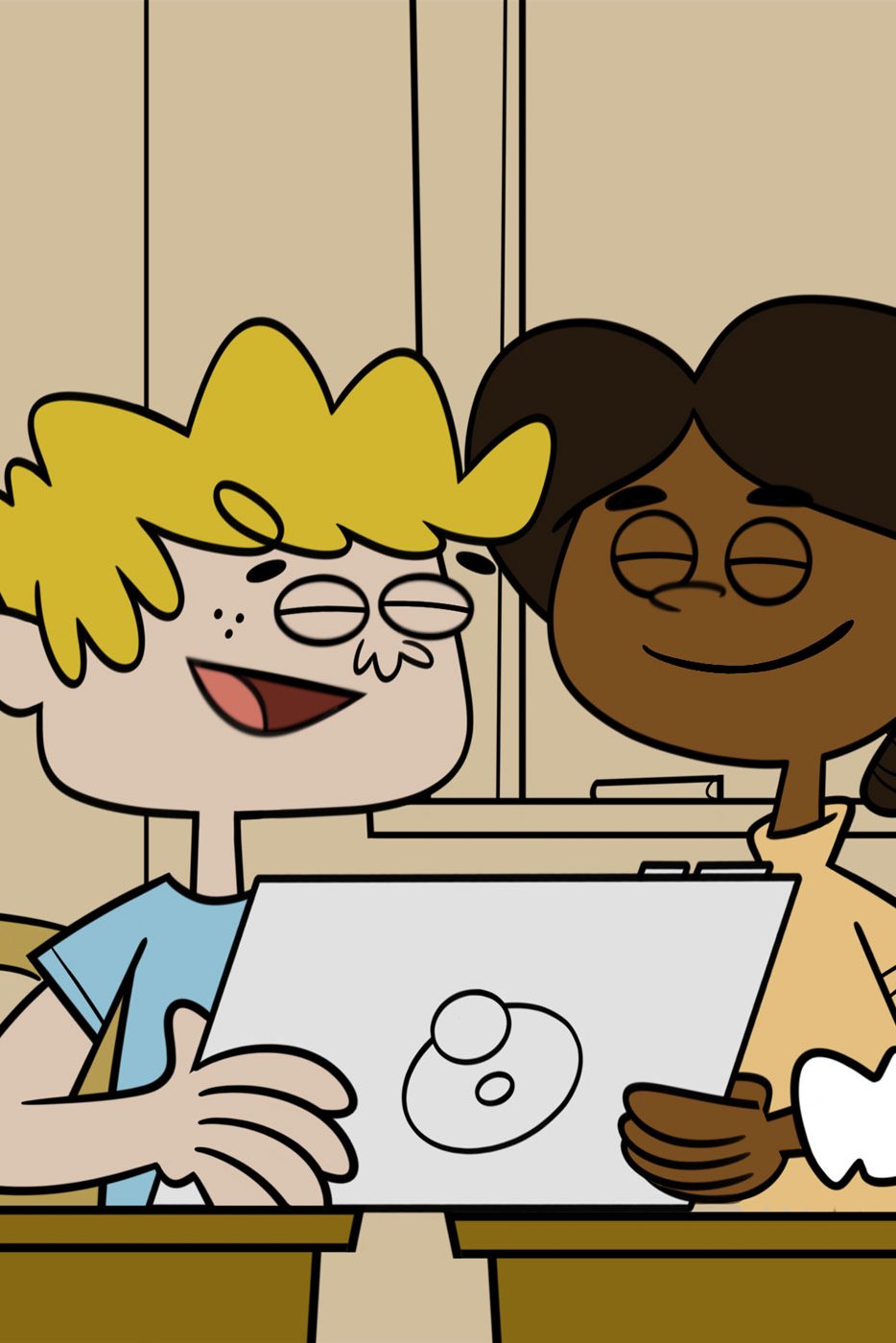
Explore the community of Williamsburg through this animated series of videos entitled “What the Huzzah is That?” Designed for early grade-schoolers, each video highlights a different facet of 18th-century community life, encouraging children to think about and find relevance in their communities today.
Uncovering Loyalties
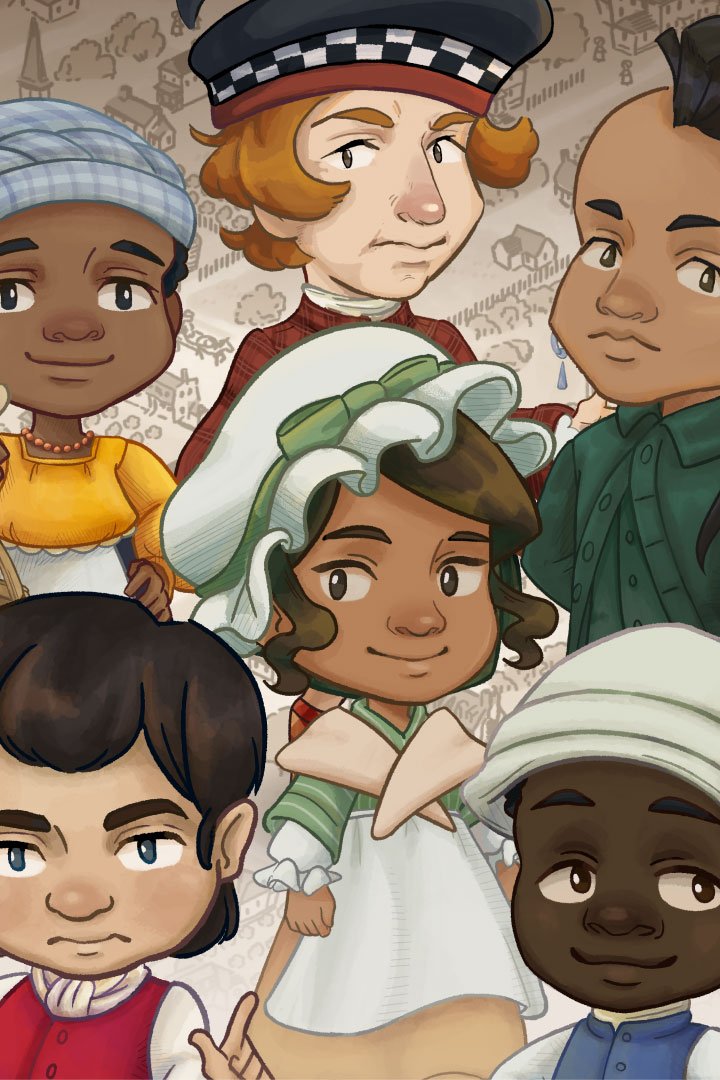
It's 1774 in Williamsburg, and tensions in the British American Colonies are rising. You're invited to engage with young people around the city to see if independence is in the air... or not?
Educator Resources
Bring history to life in the classroom with multimedia tools, and in-person at Colonial Williamsburg.