The Declaration of Independence
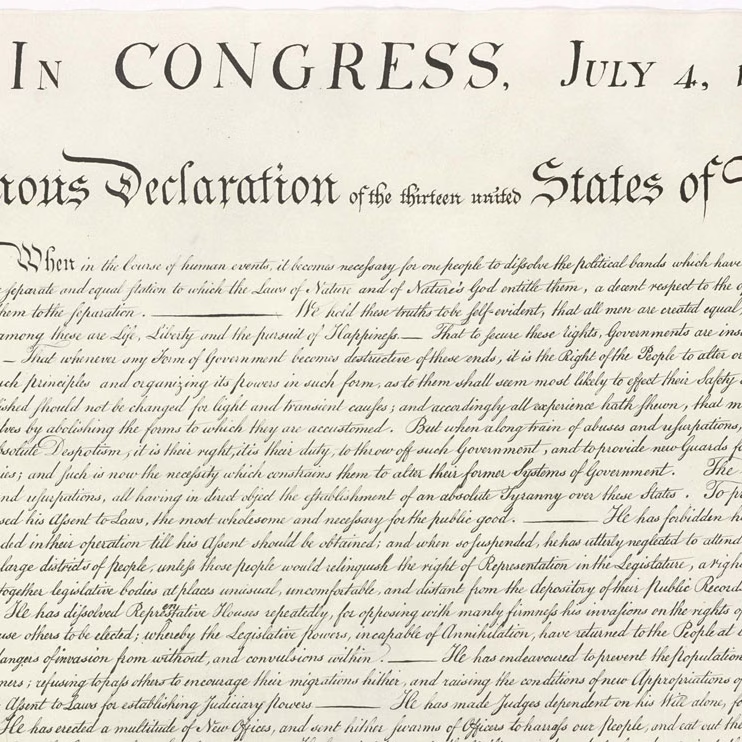
Adopted by the Continental Congress on July 4, 1776, the U.S. Declaration of Independence formally announced that thirteen North American colonies had dissolved their connection to Great Britain. Its significance lay not only in its assertion of sovereignty and self-government, but also in the claim of equality embedded within its preamble. Principally authored by Virginia delegate Thomas Jefferson, the Declaration of Independence has become the most enduring statement of the principles of the American Revolution.
Listen to the Declaration
One of the key documents in the founding of the United States, the Declaration of Independence has shaped world history.
Writing the Declaration
Once unthinkable, many colonists accepted that independence was inevitable by the spring of 1776. Virginia had instructed its delegates to press for independence, and on June 7 Richard Henry Lee brought that resolution before the meeting of colonial representatives known as the Continental Congress. While Congress waited for other states to prepare instructions for their delegates, it appointed a committee of five to draft a declaration: John Adams, Benjamin Franklin, Roger Sherman, Robert Livingston, and Thomas Jefferson.
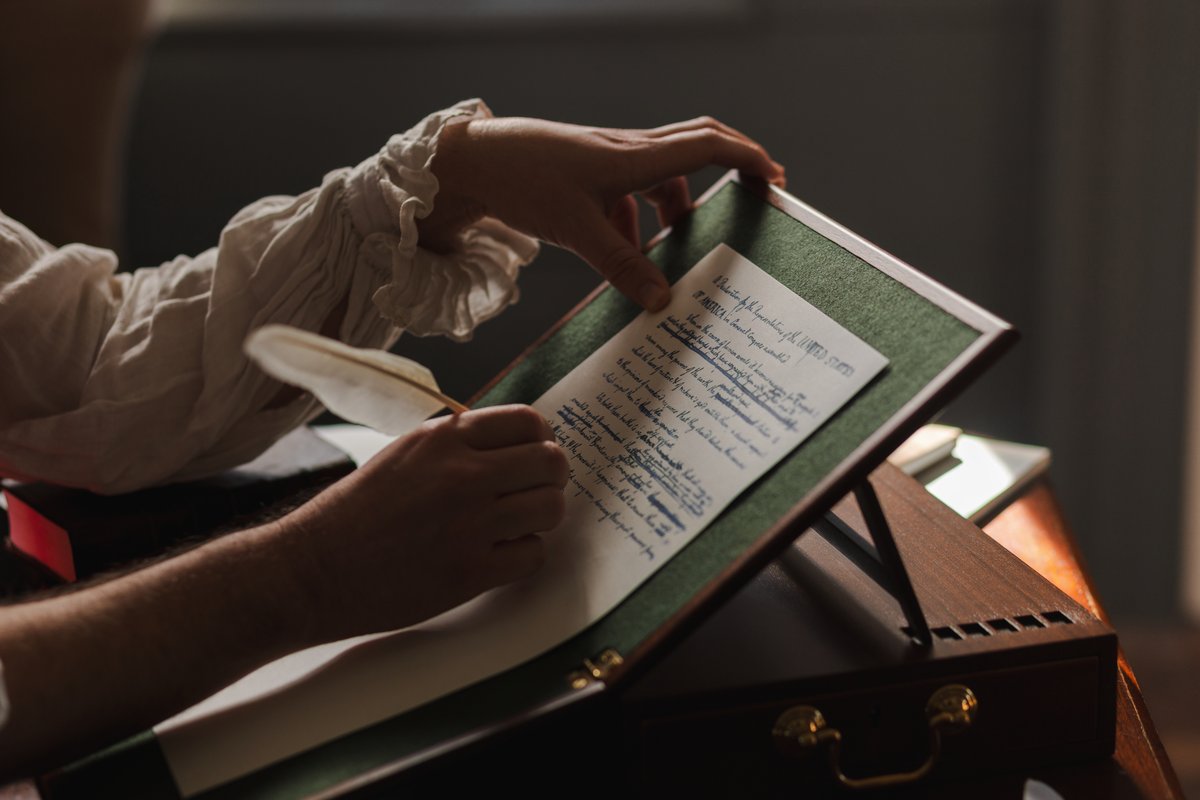
Since Virginia was the largest and wealthiest colony, and since its leaders had issued the first call for independence, some thought a Virginian needed to sit on the committee. Jefferson, though, was probably not the first choice. Lee and George Wythe, both better known than Jefferson, had left Philadelphia to join deliberations in Williamsburg about the new state constitution. Jefferson was therefore pulled into the committee. After the committee pushed Jefferson to take up the task, he retired to his rented rooms at the Philadelphia home of a bricklayer named Jacob Graff, and began to compose the Declaration.
Revolutionary Documents
What can America’s founding documents tell us about the ideas at the center of the revolution? And what can those ideas tell us about the future of the republic?
Influences
The Declaration’s first two paragraphs, known as the preamble, are its best-known and most quoted. This section is deeply rooted in Enlightenment thinking, particularly in natural rights and social contract theory, ideas most often associated with the English philosopher John Locke. Historians have traced numerous similarities between Jefferson’s draft and Locke’s Two Treatises of Government, his most influential work of political philosophy.
The most famous passage of the Declaration, “that all men are created equal, that they are endowed by their Creator with certain unalienable Rights, that among these are Life, Liberty and the pursuit of Happiness,” reflects the radical thinking of the age. Locke had once asserted that mankind was born with the right to “preserve his property, that is, his life, liberty and estate.”1 George Mason’s draft of the Virginia Declaration of Rights, published just weeks before the Declaration, had made the same point: that mankind had a right to “the enjoyment of life and liberty, with the means of acquiring and possessing property, and pursuing and obtaining happiness and safety.” The parallels between these two declarations extend well beyond that famous passage. Jefferson wrote more fluidly than either Locke or Mason, distilling ideas in circulation into memorable phrases, rather than inventing them. He always maintained that the Declaration’s words were neither original nor lifted from other sources but were instead “an expression of the american mind.”2
Williamsburg and the Declaration
The path to the American Declaration of Independence ran through Williamsburg, Virginia. Click the arrows to learn more about Williamsburg’s influence on the birth of U.S. independence.

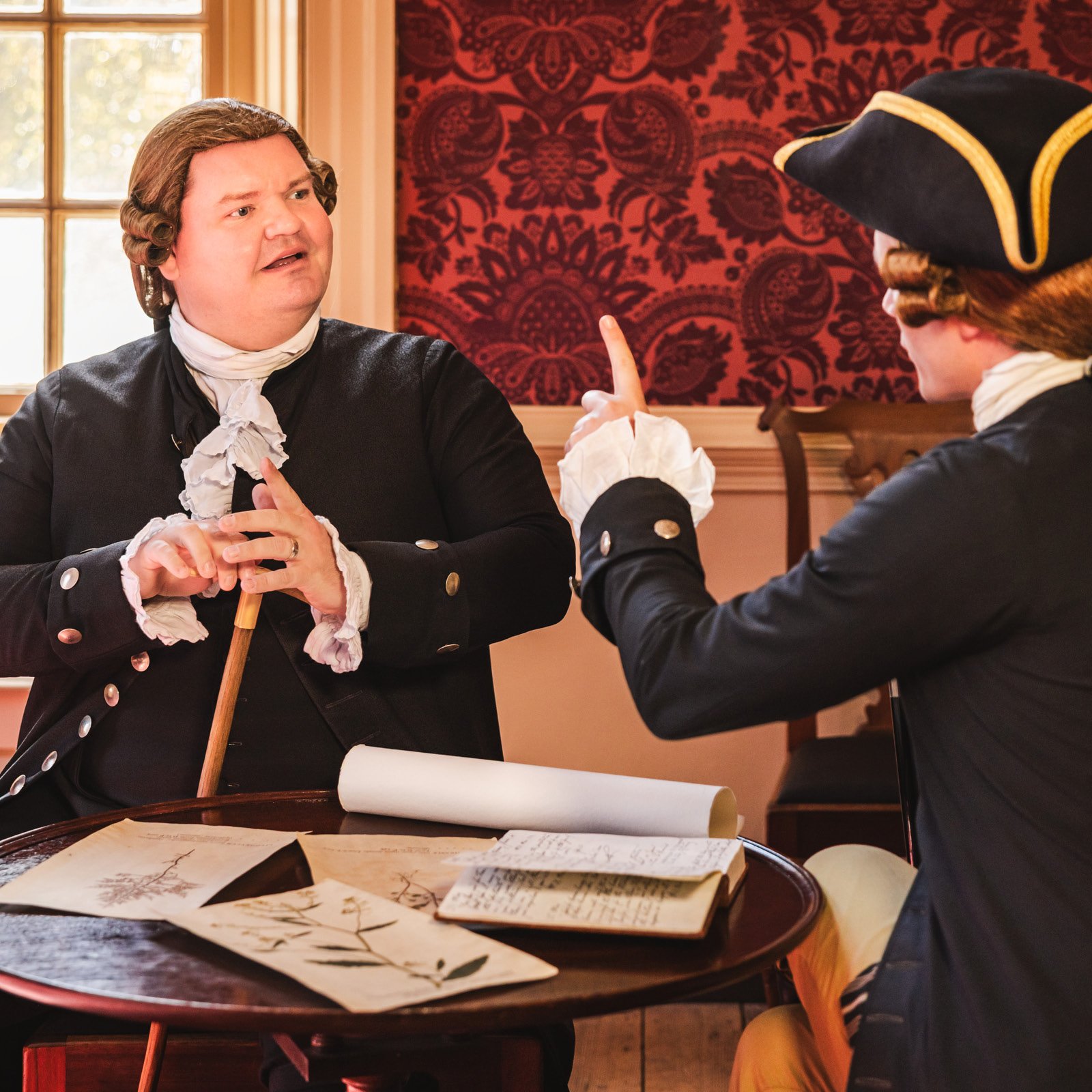
Jefferson's Education
Jefferson encountered many crucial writers and ideas for the first time in Williamsburg, as a student at the College of William & Mary, and later studying law under George Wythe. Many of these ideas would later form part of the intellectual foundations of the Declaration of Independence.
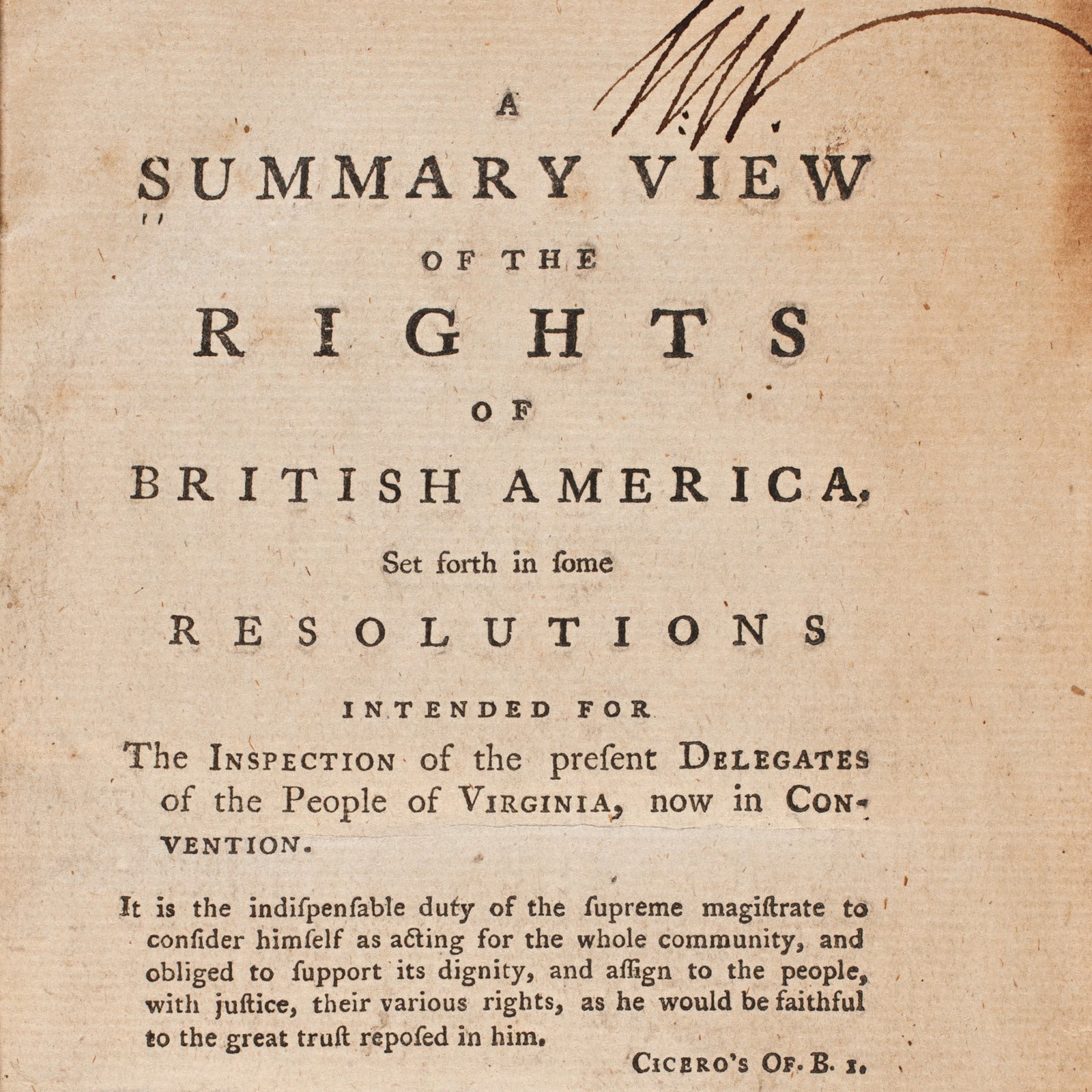
A Summary View
Thomas Jefferson’s first pamphlet, A Summary View of the Rights of British America, was published in Williamsburg in 1774. Its list of grievances against King George III would later appear in Jefferson’s draft of the Declaration of Independence. Image: Special Collections, John D. Rockefeller Jr. Library, CWF.
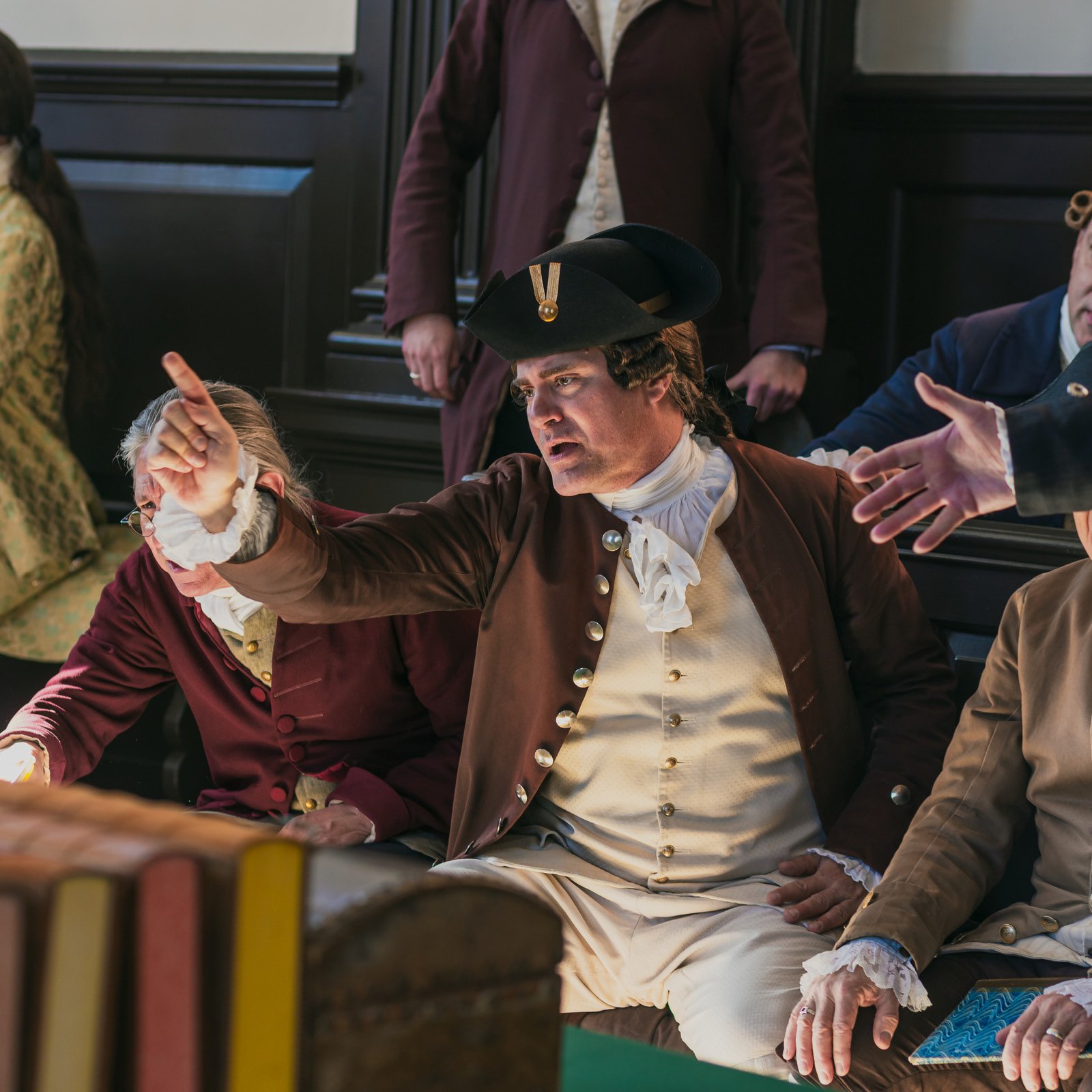
May 15, 1776
On May 15, 1776, the Fifth Virginia Convention instructed the colony’s delegates at the Second Continental Congress in Philadelphia to propose independence. This act by the leaders of British North America’s largest and most influential colony set in motion the beginnings of American nationhood.
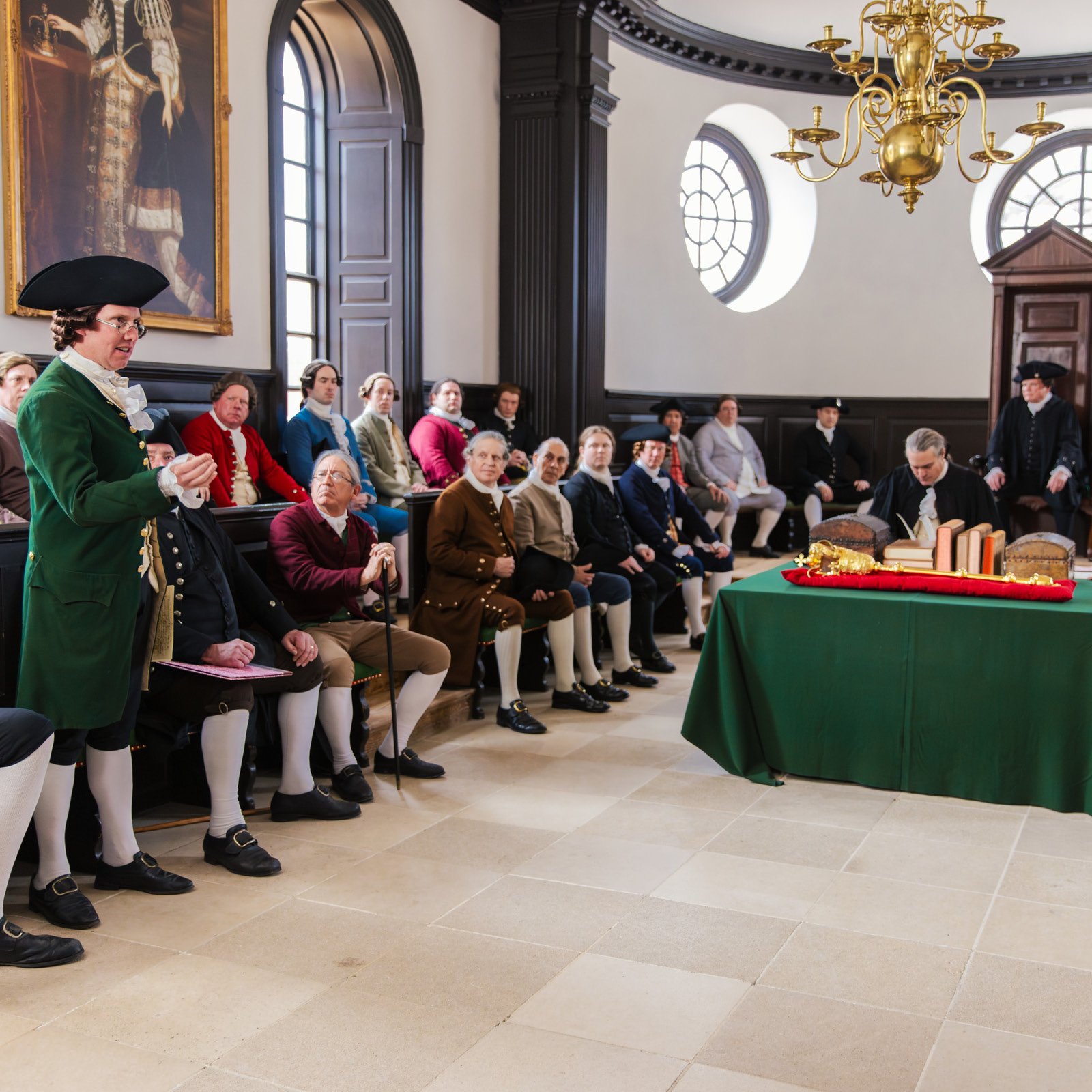
Virginia Declaration of Rights
The Fifth Virginia Convention also created a new constitution and a Declaration of Rights, authored by George Mason in Williamsburg. Jefferson likely consulted this as he drafted the Declaration of Independence. The two documents share many similarities, though Jefferson’s language is generally more direct and clear.
Celebrating Independence
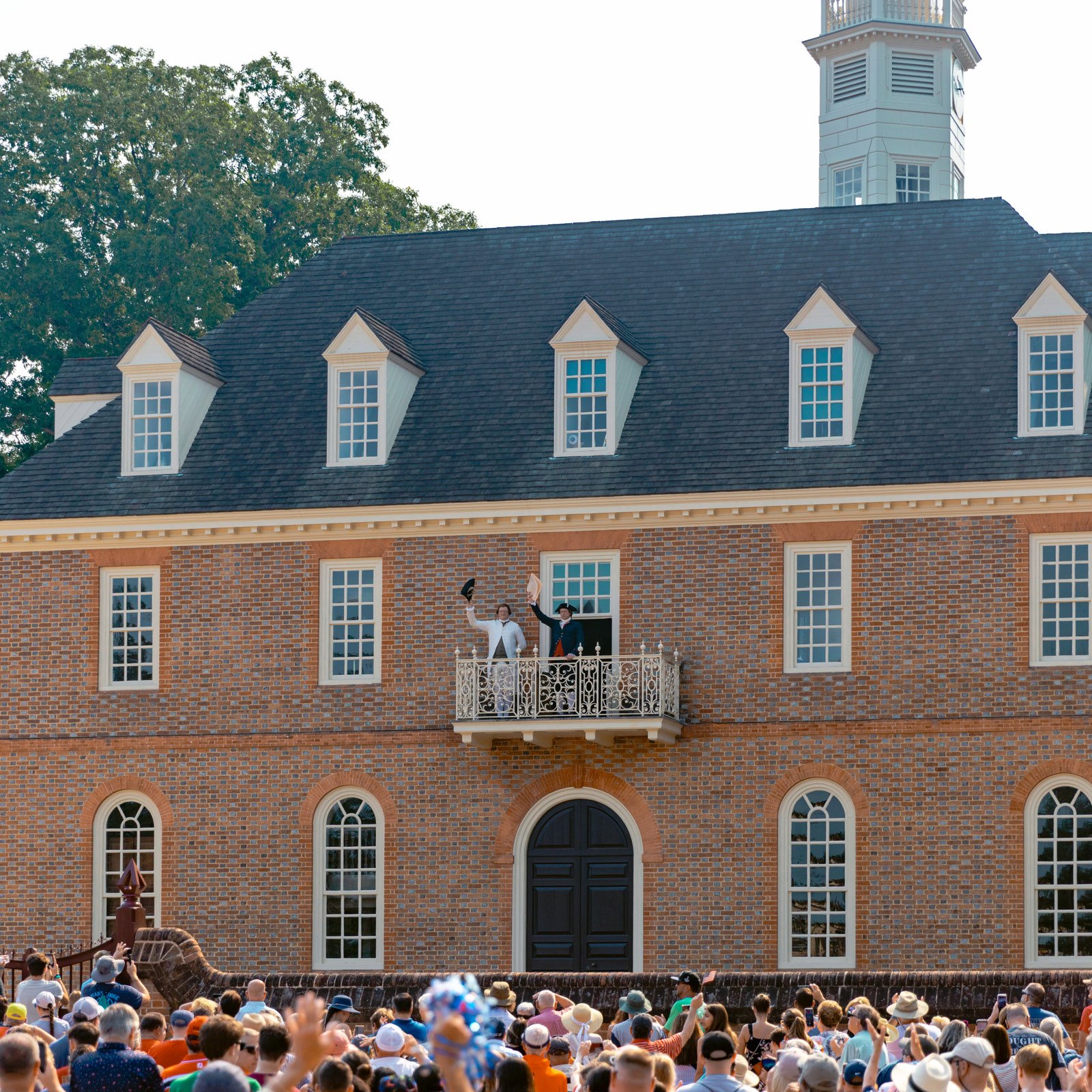
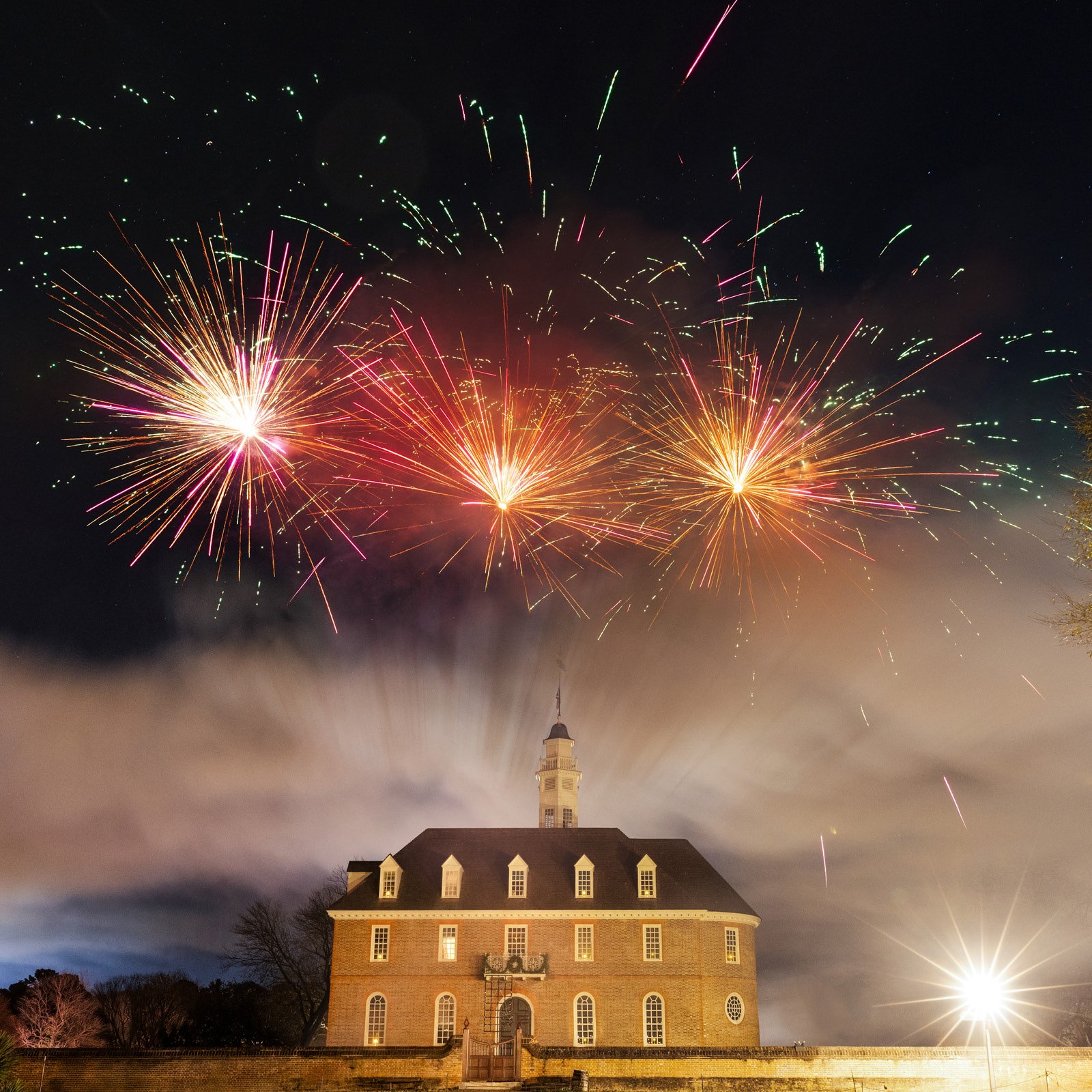
Williamsburg celebrated the May 15 resolution, calling for Virginia’s delegates to propose independence, “with illuminations, and other demonstrations of joy.”[3] Once a copy of the Declaration arrived on July 25, it was proclaimed publicly and “received with universal applause.”[4]
Grievances
As Virginians wrote their new constitution in the summer of 1776, Jefferson anxiously waited in Philadelphia. He would have preferred to be in Williamsburg, shaping Virginia’s future. Several Virginia delegates had already left Philadelphia to join the Fifth Virginia Convention in Williamsburg. Jefferson, who habitually wrote documents nobody had asked for, sent an unsolicited draft of a Virginia constitution to Williamsburg. It arrived too late in deliberations to shape the substance of the debate, but the delegates agreed to adopt Jefferson’s proposed list of grievances against King George III as a preface to the constitution.5 As he wrote the Declaration of Independence, Jefferson drew on these grievances, as well as those he had previously listed in a 1774 pamphlet called A Summary View of the Rights of British America.
The grievances explained why colonists were declaring independence. Yet many were obscure at the time and are even more so today. Some accusations are too vague to verify. Others may seem minor in retrospect. Many Loyalists were unimpressed by the reasoning behind the declaration.6 But even if many grievances refer to events that are obscure to us today, they also address many of the revolutionaries’ core complaints: taxation without representation, the centralization of imperial power, interference with colonial courts and trade, Britain’s efforts to mobilize its Indigenous allies (described as “merciless Indian Savages” in the Declaration) against the colonies, and its offers to free enslaved people fleeing rebellious colonists.
Slavery and the Declaration
While the Declaration of Independence promised equality, its text reflects the realities of colonial slavery. One grievance accused King George III of sparking “domestic insurrections amongst us,” referring to Governor Dunmore’s proclamation the previous year, which promised freedom to enslaved people who escaped Patriot enslavers to fight for the British cause.
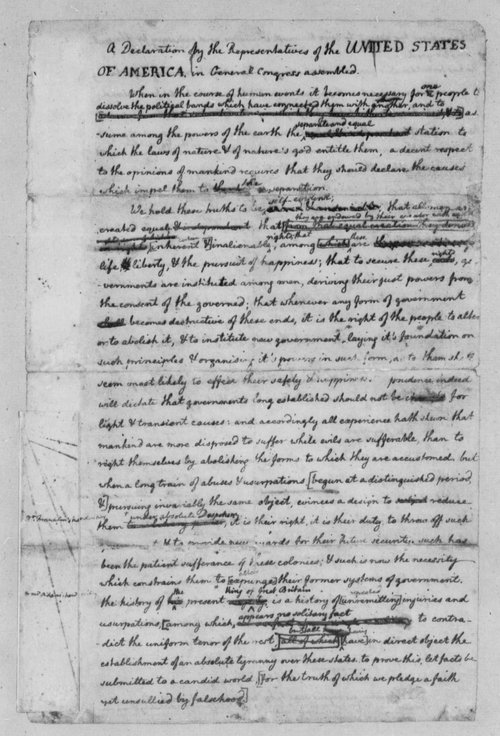
Jefferson's original draft of the Declaration of Independence. Courtesy of the Library of Congress.
Jefferson’s first draft accused King George of waging “cruel war against human nature itself” by blocking the end of the African slave trade. Virginia elites like Jefferson had long acknowledged the horrors of that trade. But they often failed to note that they also stood to benefit from the end of the slave trade, which would increase the value of the enslaved people whom they already owned. Many also feared that continued imports of enslaved people made slave rebellions more likely. Congress ultimately struck out the anti-slavery clause at the urging of delegates from South Carolina and Georgia.7
Yet the Declaration’s preamble’s radical claim of human equality remained. The Virginia Declaration of Rights, adopted just weeks before the Declaration of Independence, included a clause intended to exclude enslaved people from the promise of natural equality. The U.S. Declaration’s preamble made no such exception. It has proven to be a powerful tool for oppressed people around the world.
The Declaration’s Impact
Abraham Lincoln once wrote that the Declaration was “a rebuke and a stumbling-block to the very harbingers of re-appearing tyranny and oppression” around the world. Scroll on to learn more about how people around the world have used the U.S. Declaration of Independence in their struggles for liberty and self-determination.
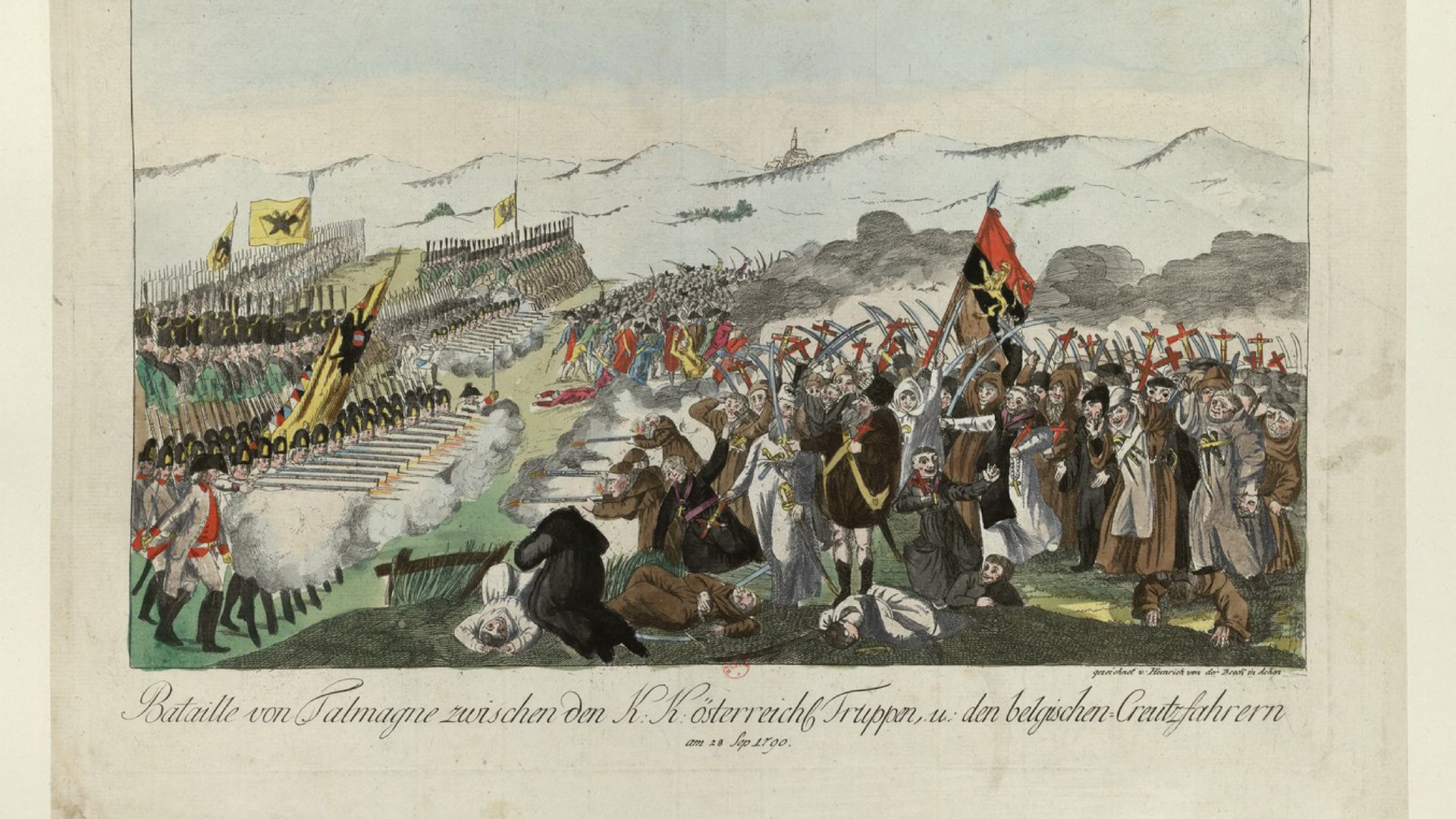
Flanders (1790)
The Declaration’s Global Impact
The first imitation of the Declaration came in 1790, when a Flanders Manifesto declared independence from the Austrian emperor.[8] Image: gallica.bnf.fr
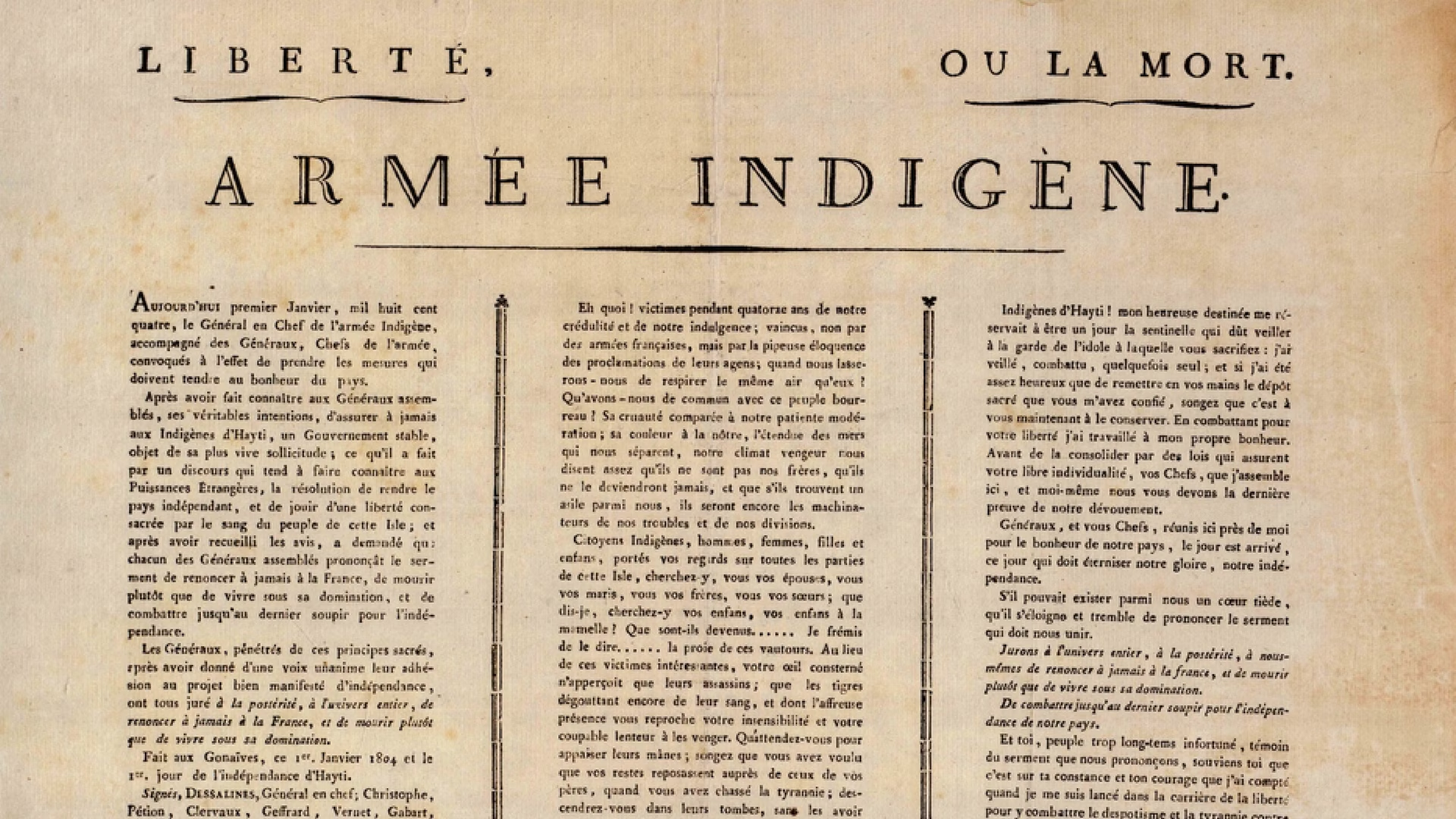
Haitian Revolution (1804)
The Declaration’s Global Impact
Haiti proclaimed its independence and the end of slavery on January 1, 1804. The U.S. did not recognize Haitian independence until 1862.[9]
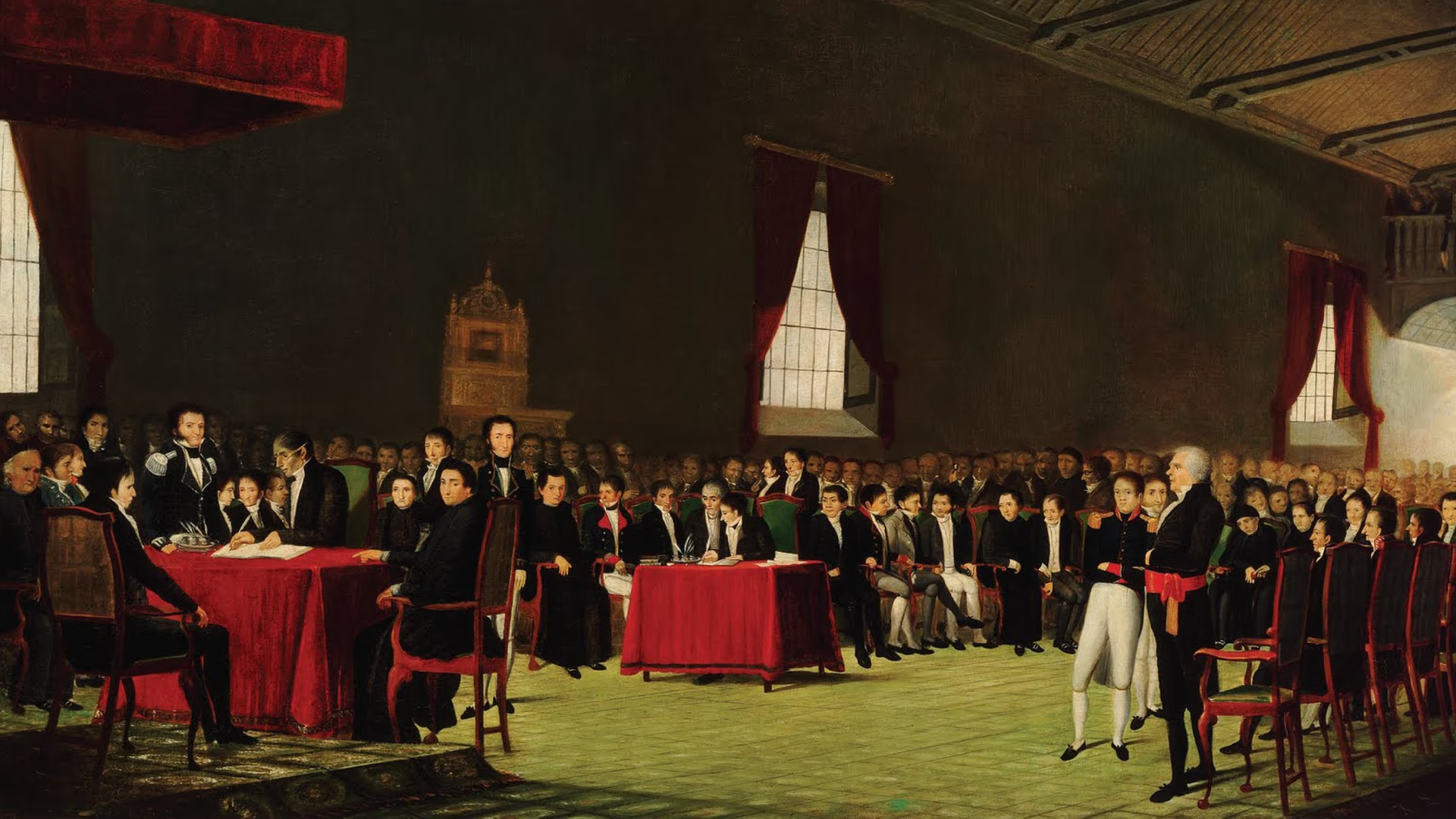
Venezuela (1811)
The Declaration’s Global Impact
On July 5, 1811, Venezuelans used a format similar to the U.S. Declaration to formally declare independence from the Spanish empire.
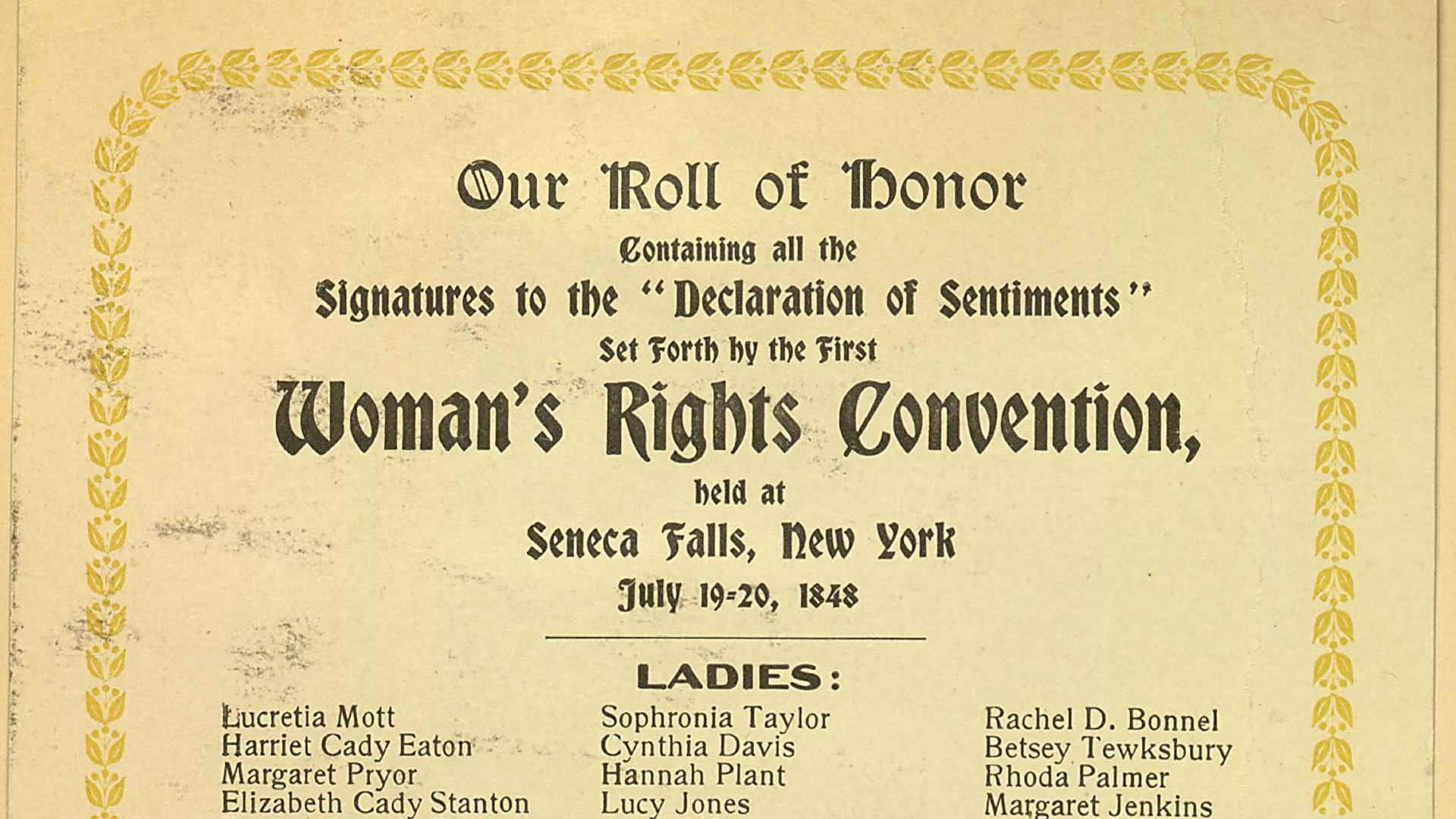
Seneca Falls (1848)
The Declaration’s Global Impact
In 1848, the Seneca Falls American Women’s Rights Convention passed a Declaration of Sentiments declaring “that all men and women are created equal.”
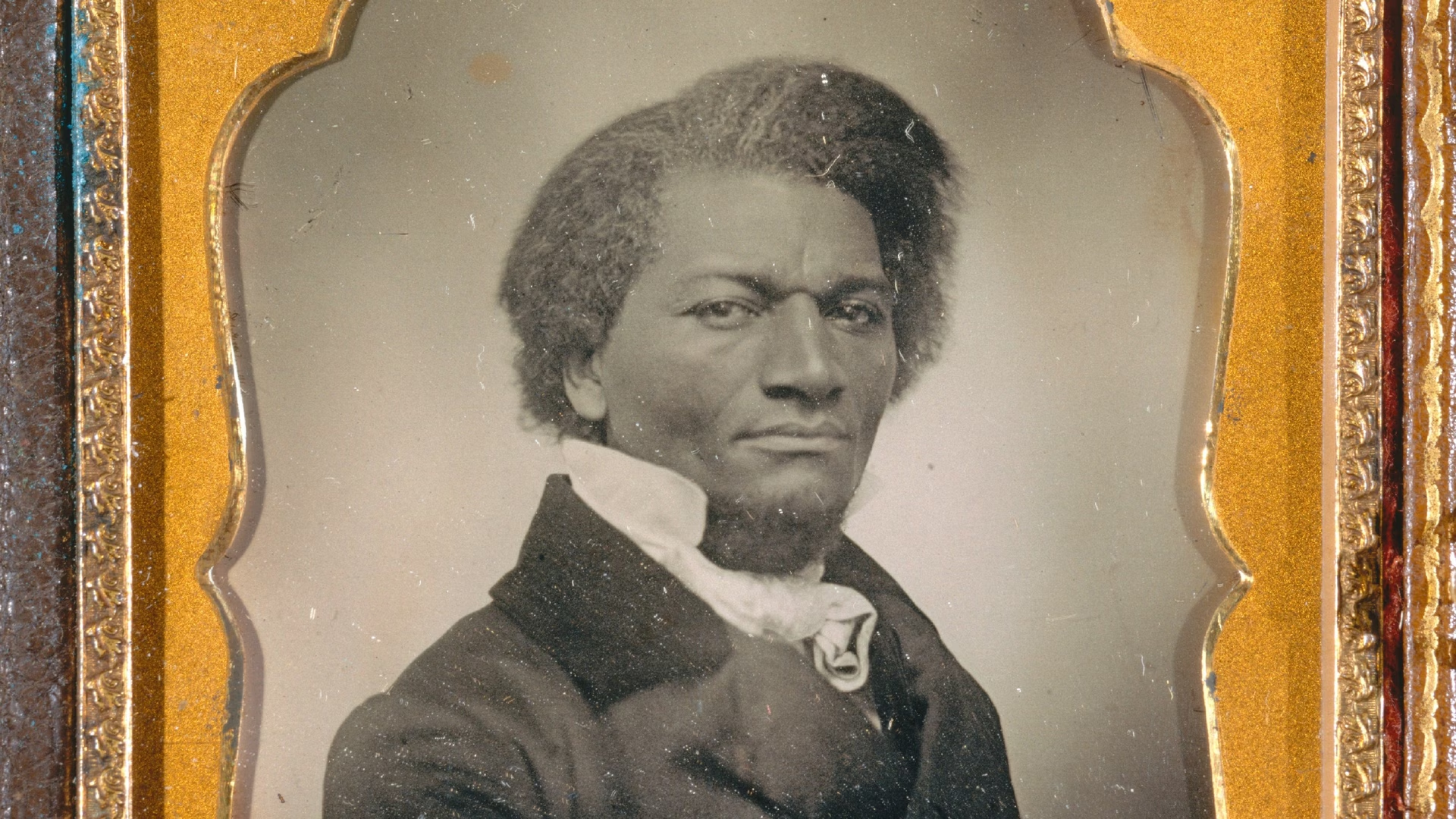
Frederick Douglass (1852)
The Declaration’s Global Impact
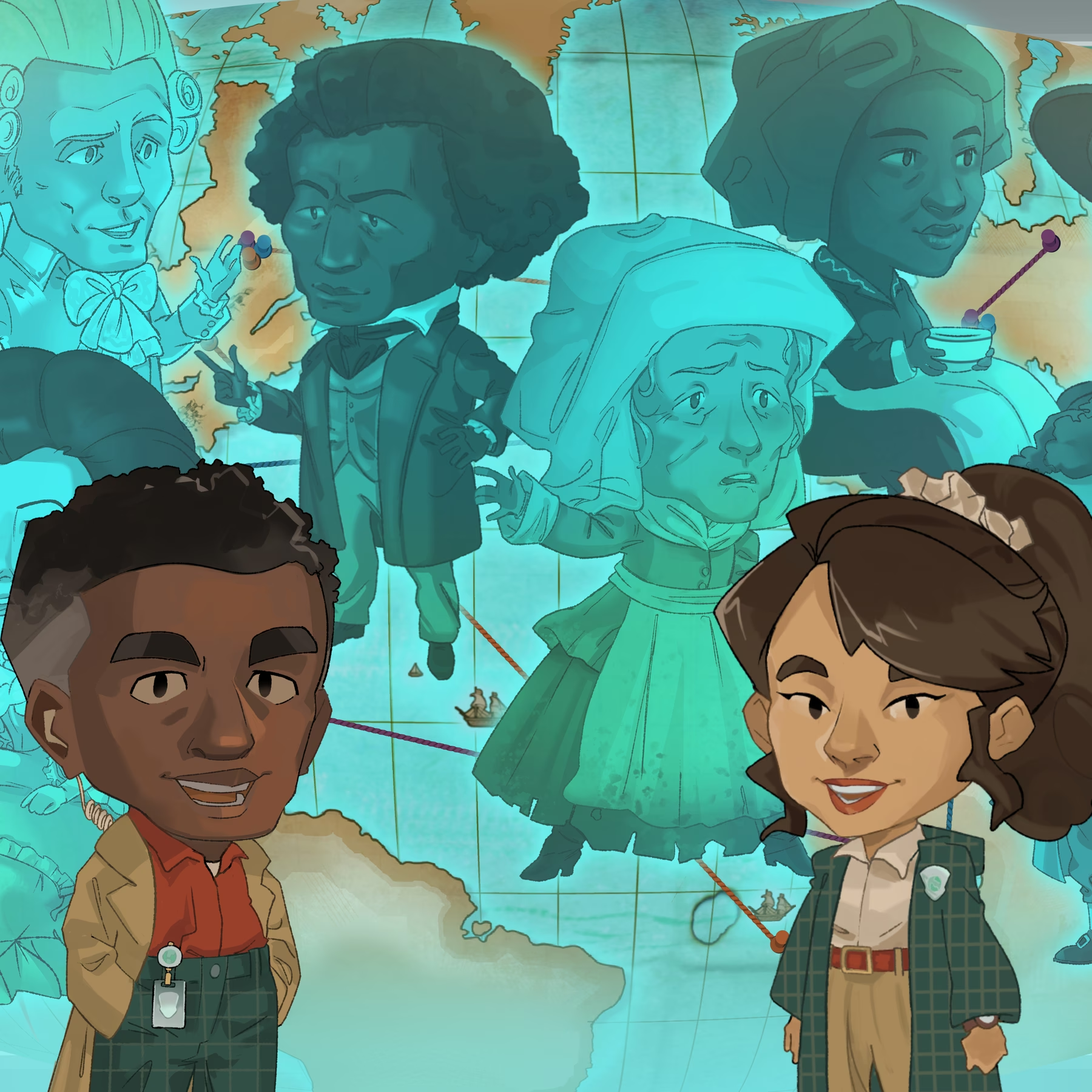
Antislavery leaders like Frederick Douglass used the Declaration to plead their cause, asking if its “great principles . . . extended to us?”
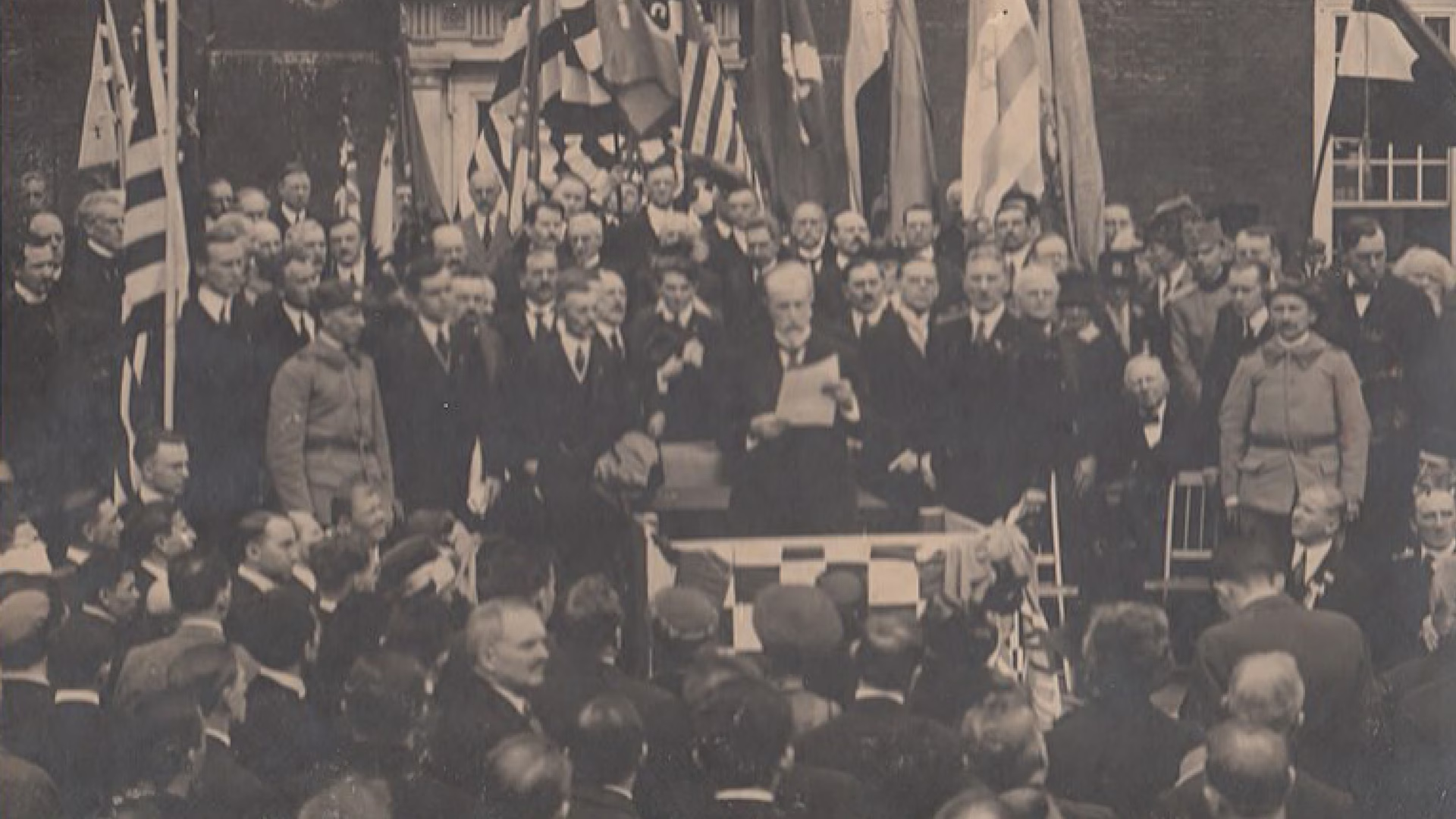
Decolonization
The Declaration’s Global Impact
Post-World War decolonization led nations like Czechoslovakia (1918) and Vietnam (1945) to use the U.S. Declaration as a model.
Today
The Declaration’s Global Impact
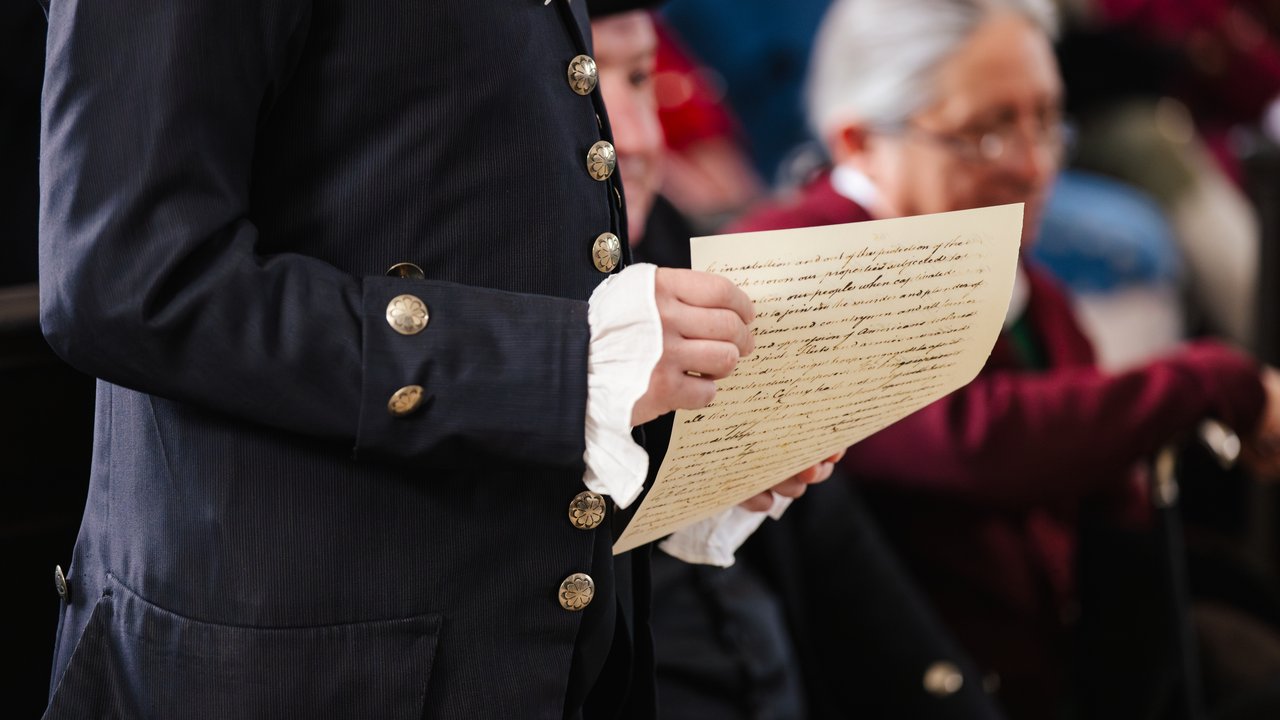
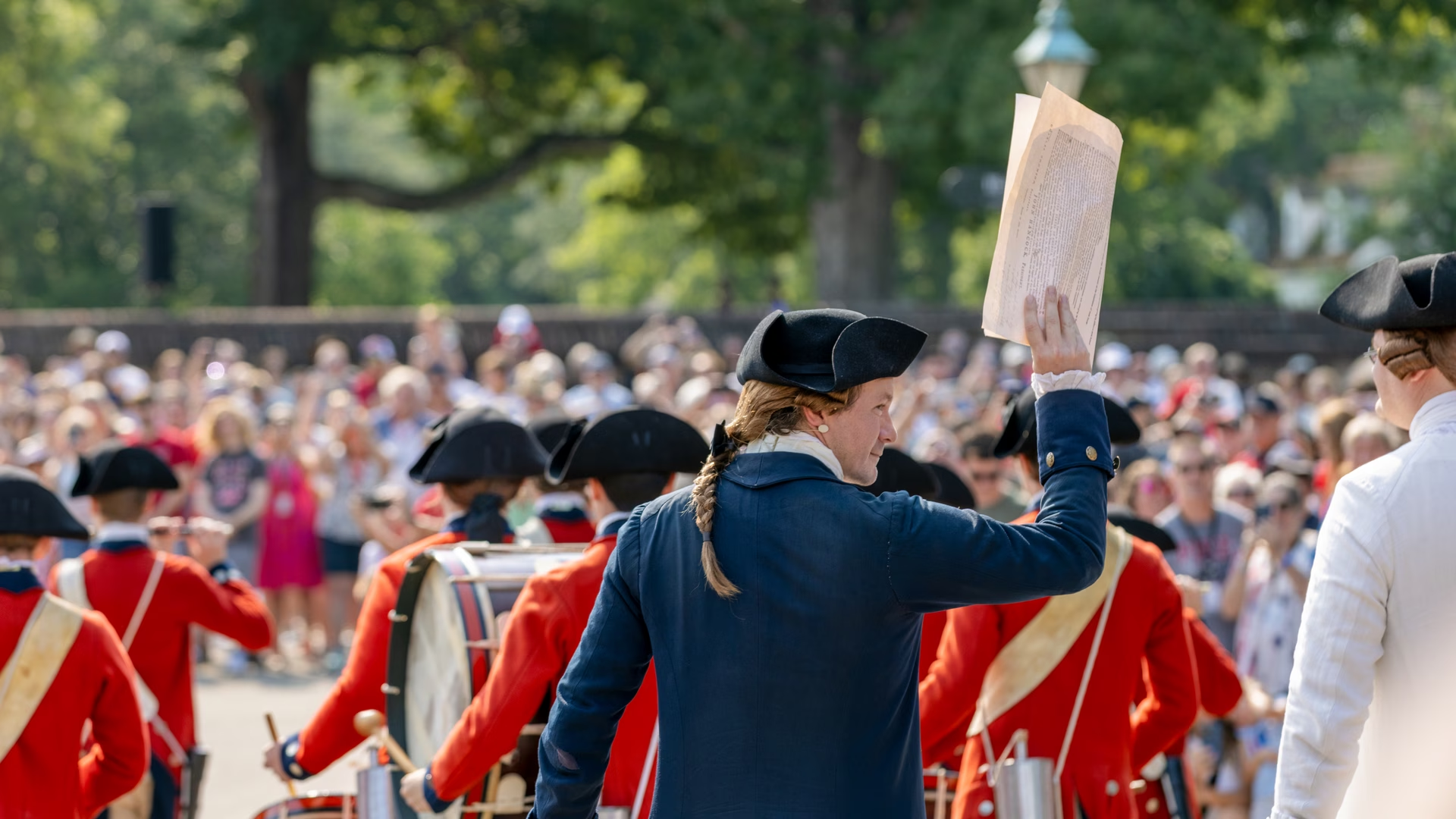
Colonial Williamsburg’s visitors hear the text of the Declaration read aloud every July 4, a yearly reminder of national origins and aspirations.
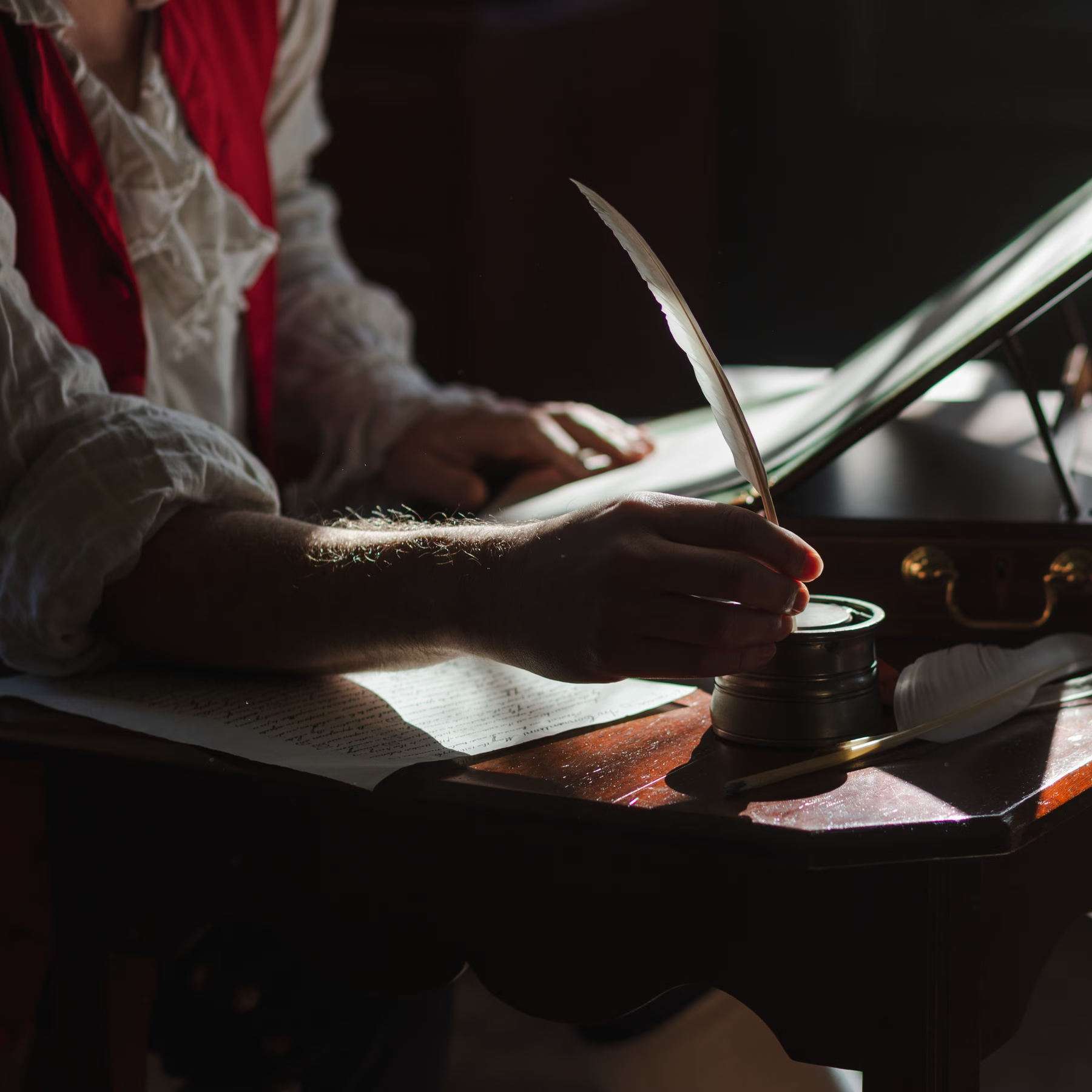
In a photo/video shoot at the Powell House for the "Flame of Revolution" program, interpreter Kurt Smith portrays Thomas Jefferson writing the Declaration of Independence at a writing desk. January 21, 2026.
Learn More
Further your exploration with these additional resources.
Sources
- John Locke, Two Treatises of Government (London: A. Bettesworth, 1728), 199.
- “From Thomas Jefferson to Henry Lee, 8 May 1825,” Founders Online, National Archives.
- Virginia Gazette (Purdie), May 17, 1776, p. 3, link.
- Virginia Gazette (Dixon and Hunter), July 29, 1776, p. 6.
- Jeff Broadwater, George Mason: Forgotten Founder (University of North Carolina Press, 2006), 96.
- Pauline Maier, American Scripture: Making the Declaration of Independence (Alfred A. Knopf, 1997), 109–110.
- Maier, American Scripture, 146–47.
- David Armitage, The Declaration of Independence: A Global History (Harvard University Press, 2007), 113.
- Armitage, Declaration of Independence, 116–17.