A Day in the Life of Early Williamsburg’s Horses
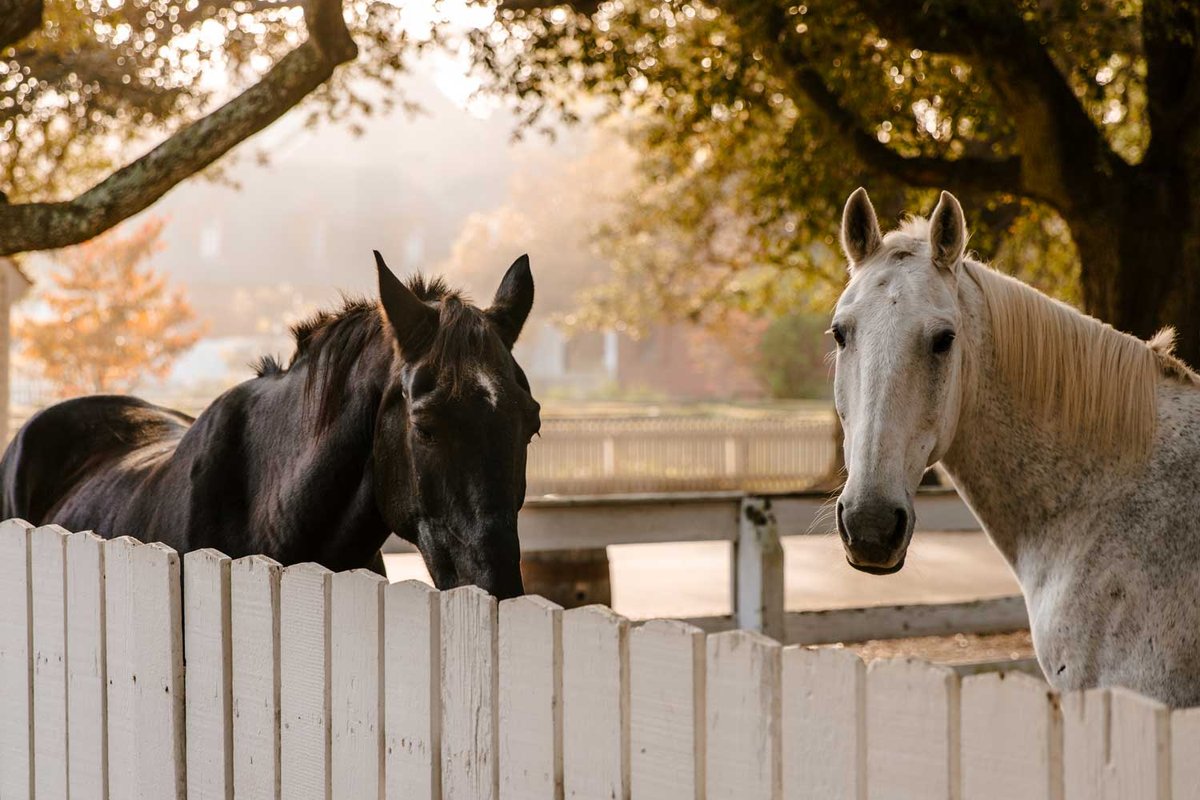
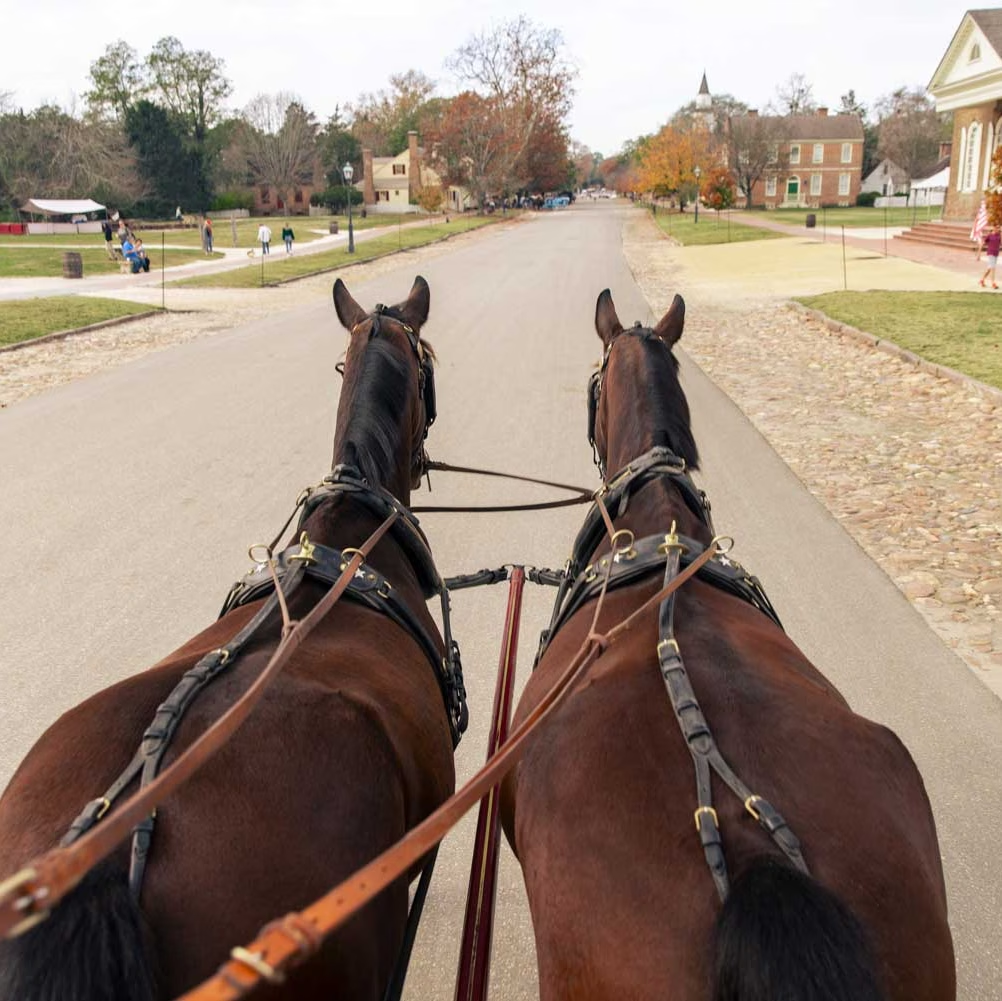
Horses are some of eighteenth-century Williamsburg’s most easily forgotten residents. Since motor vehicles have replaced horses as a means of transportation, it can be difficult to imagine how much they were a constant part of life in a preindustrial place like Williamsburg. With its wide streets and open fields, Williamsburg was a city built for horses.
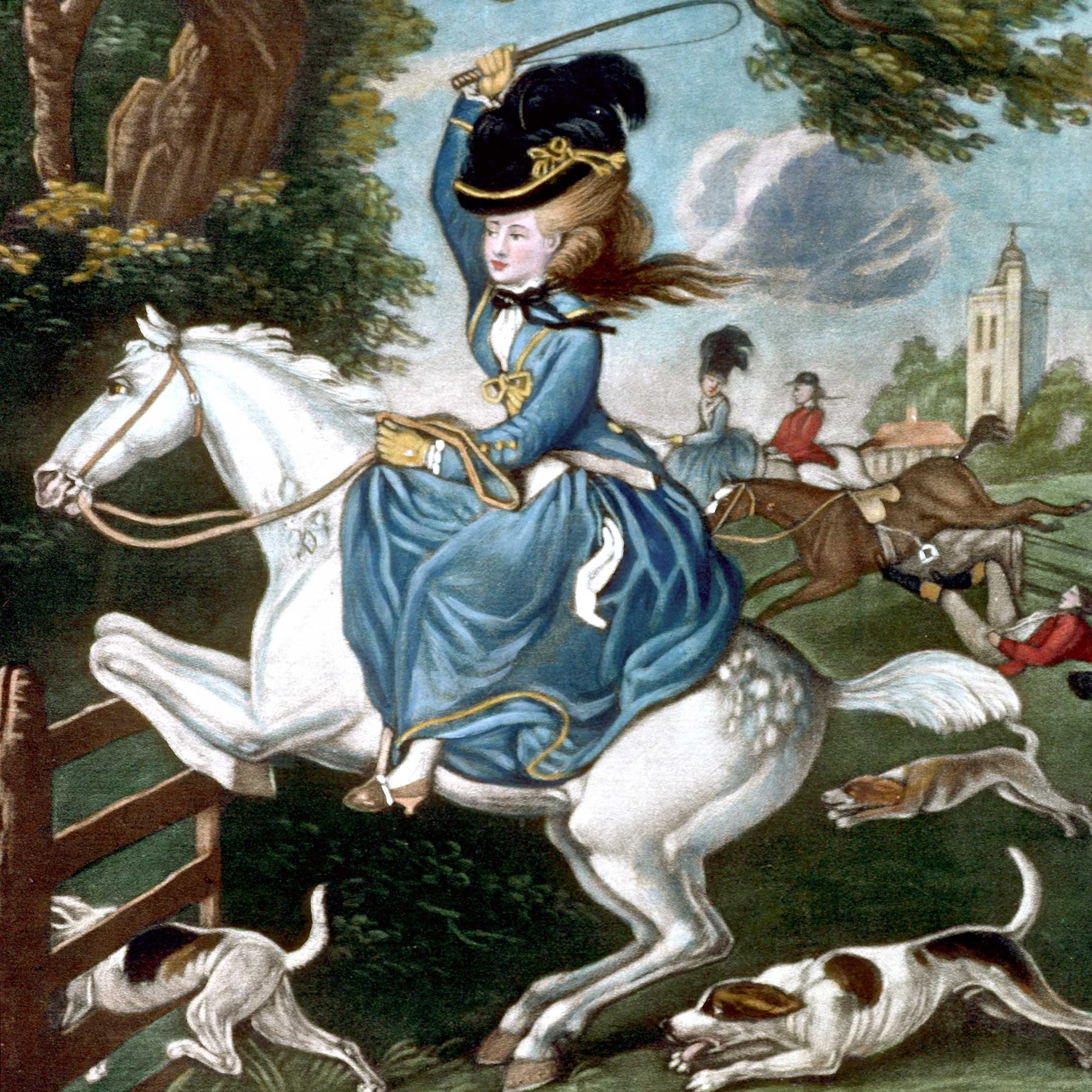
This English print depicts a young woman urging her horse over a gate, while a man falls off behind her. Courtesy CW Art Museums. Object no. 1962-285.
Horses in the Streets
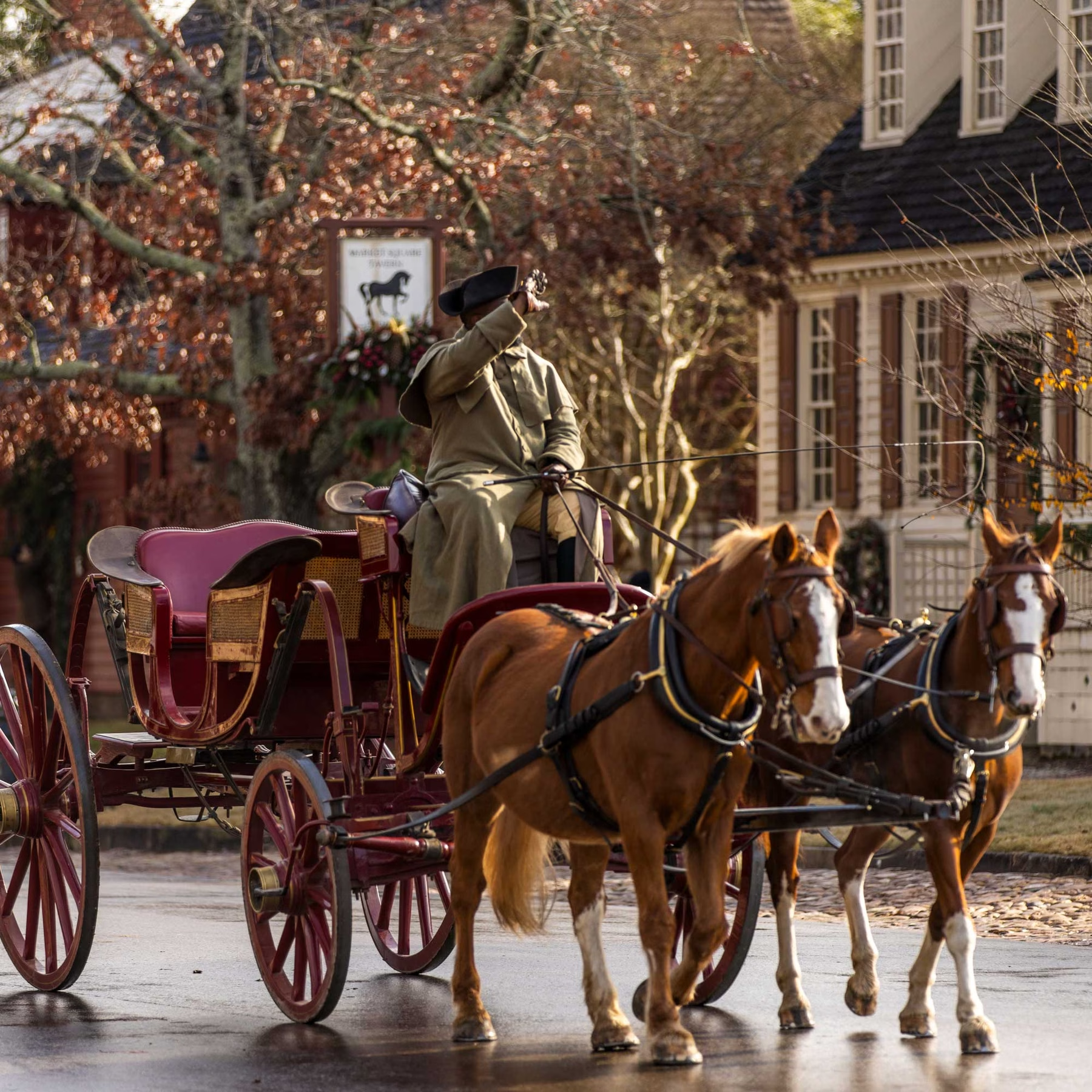
The roads of Williamsburg were a workplace for horses. Wagon horses, chosen for their strength and steadiness, pulled supplies through the streets. Riding horses, picked for their calmness and smooth gaits, spent their days conveying Virginians between buildings. In sparsely settled Virginia, where the nearest church, courthouse, or tavern was often several miles away, horses were colonists’ primary means of transportation.
A Day in the Life of Moses
An enslaved carter
Williamsburg resident Moses was an enslaved man and worked as a carter for the wealthy and powerful Peyton Randolph family.
Stables and Fields
Where a horse slept depended very much on its owner. Within Williamsburg, large households and taverns kept stables where horses rested and ate. But not every horse owner could afford to keep stables or fenced paddocks. Many horses roamed freely through the woods, where they foraged and slept, until their owners caught them when they were needed.7
In many Williamsburg households, enslaved men were responsible for managing the stables and the animals within them. Grooms cared for horses within a stable, feeding them, combing and brushing them, and fitting saddles and bridles to their bodies. They generally allowed them to forage and fed them corn, which was cheap and easily available, rather than oats or hay.8 Because the colony’s roads were a gentle, sandy soil, many horses were not shoed.9
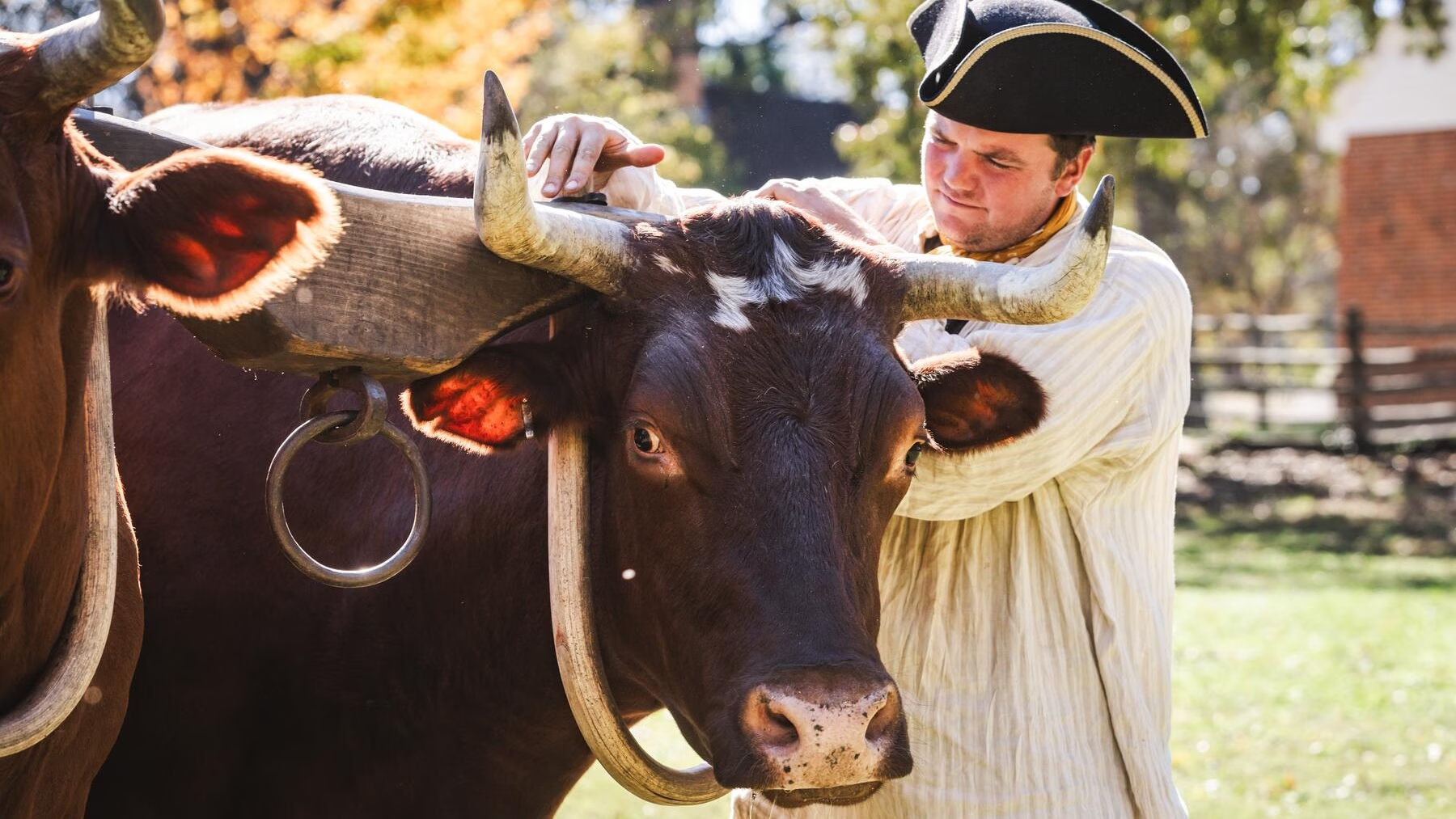
Randolph Stable Project
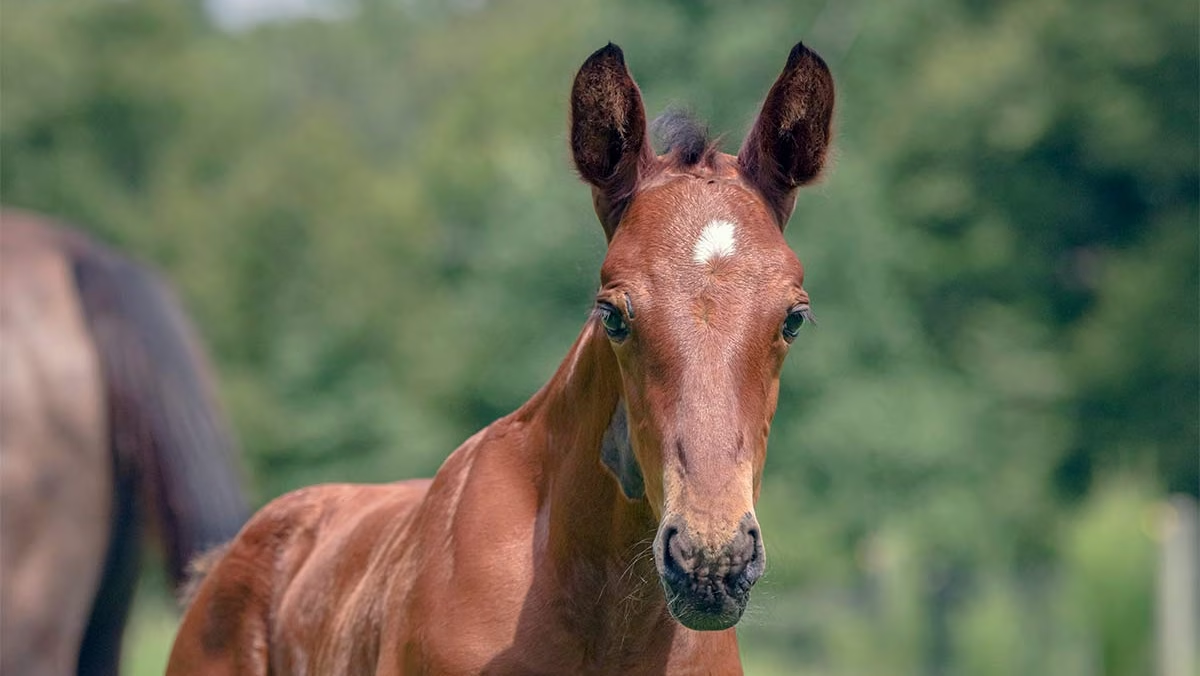
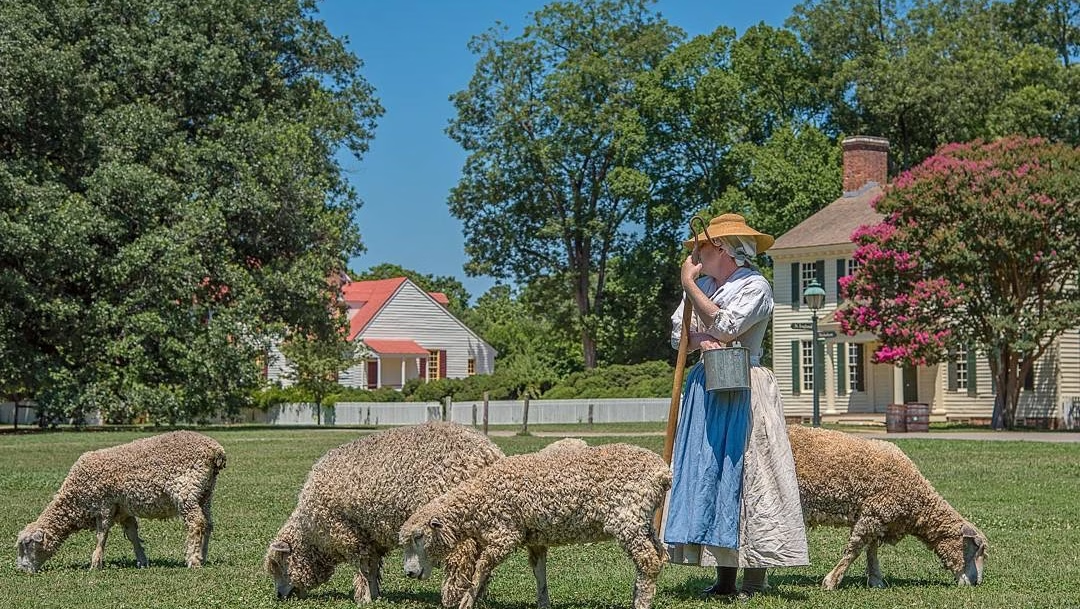
An ongoing project to reconstruct the Randolph House stable will allow visitors to interact with the approximately 150 animals in Colonial Williamsburg’s Rare Breeds program.
Plowing
Early tobacco plantations generally didn’t require much plow work from horses, since farmers usually shaped mounds for the plants and trimmed them by hand. But as tobacco exhausted Virginia’s soil, and its economy toward grain production in the second half of the eighteenth century, horses became more important to the colony’s agriculture.10 Enslaved workers regularly drove horses and oxen to plow fields of wheat and corn.
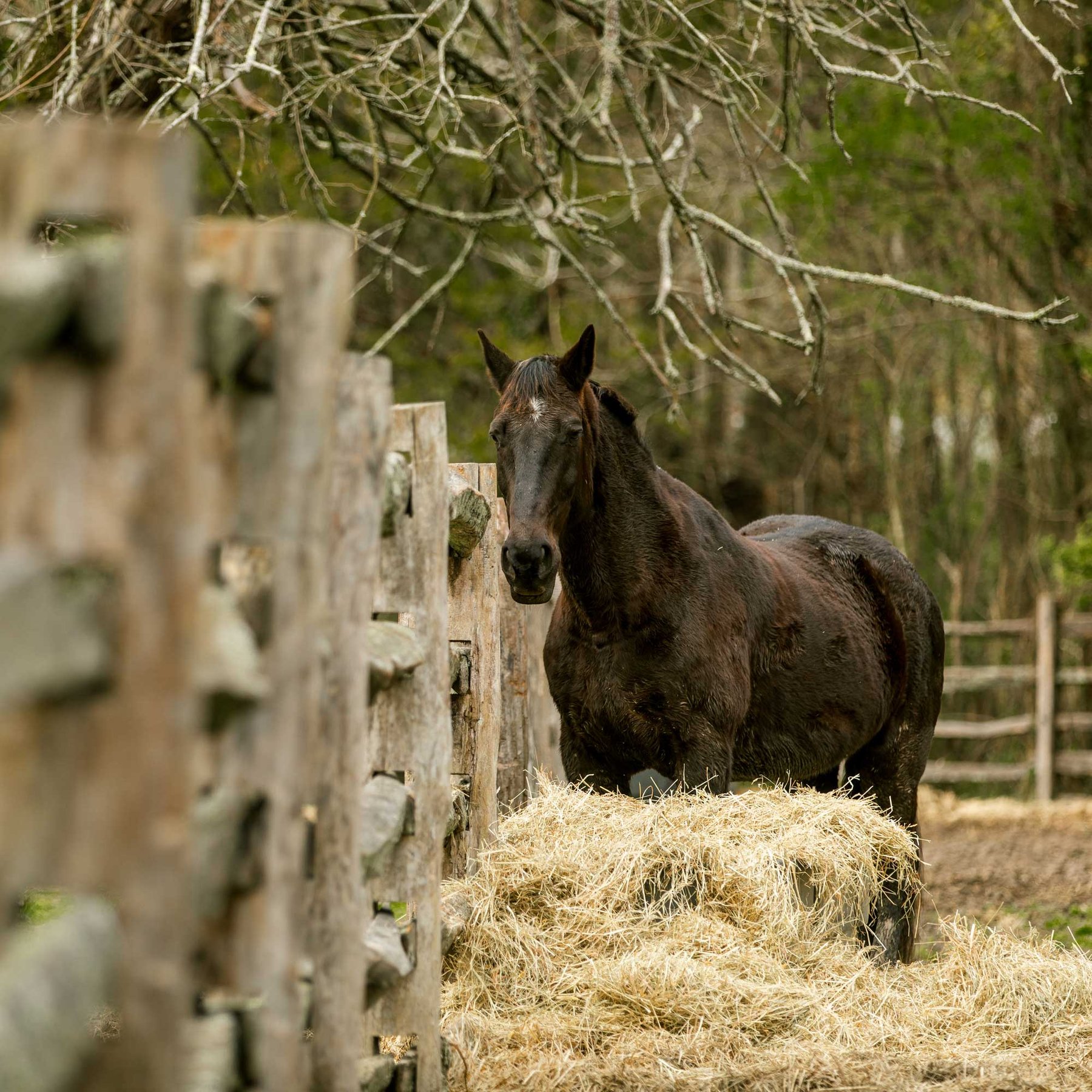
Strayed or Stolen?
At a time when horses were essential to many aspects of everyday life, the loss of a horse could devastate a family’s livelihood. When a horse went missing, Virginians often went to great lengths to recover them.

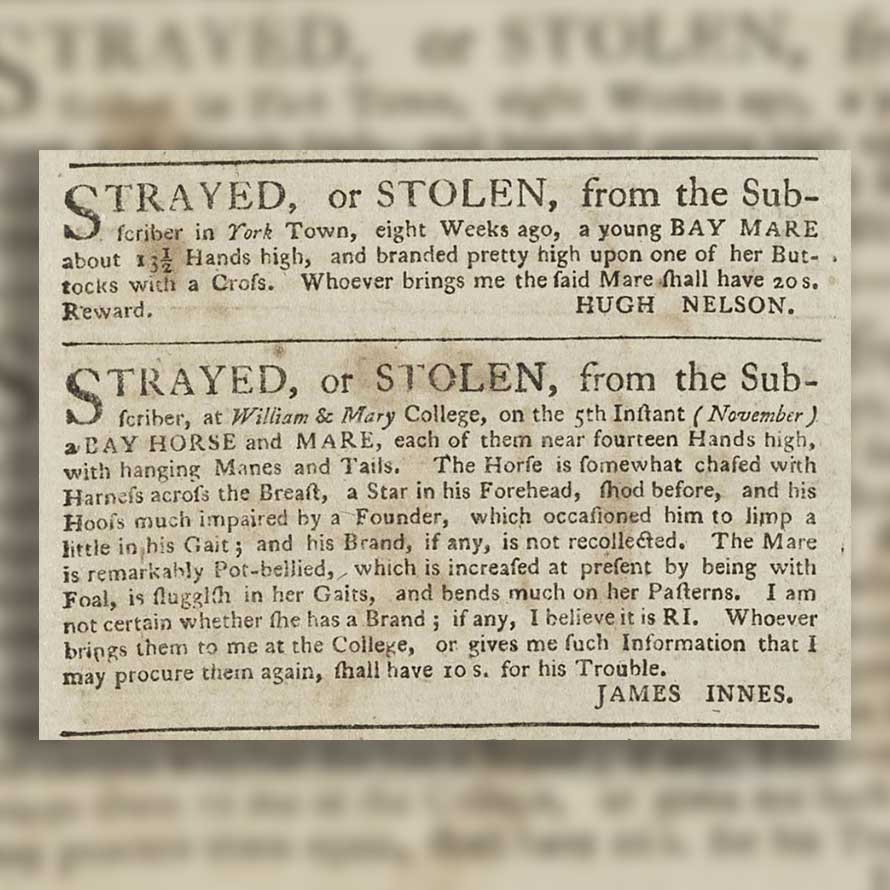
Lost Horses
Owners published notices seeking lost horses, which indicate how they identified their horses: height, brands, and in the case of a mare lost by militia officer James Innes, a limp and a pregnant belly. Another horse was “chafed with Harness across the Breast,” showing the effects of work on some animals’ bodies.
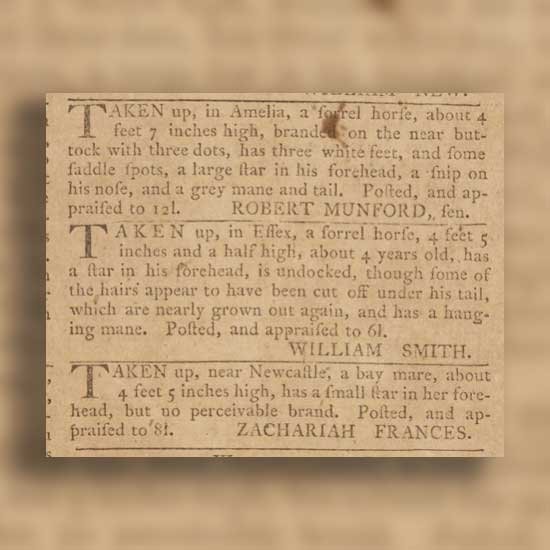
Taken Up
Virginia law required anyone who found a stray horse to follow several steps. Officials recorded a description of the horse, and it was posted at the courthouse and published in the newspaper. If no one appeared to claim the horse, it legally passed to the person who found it after a waiting period.
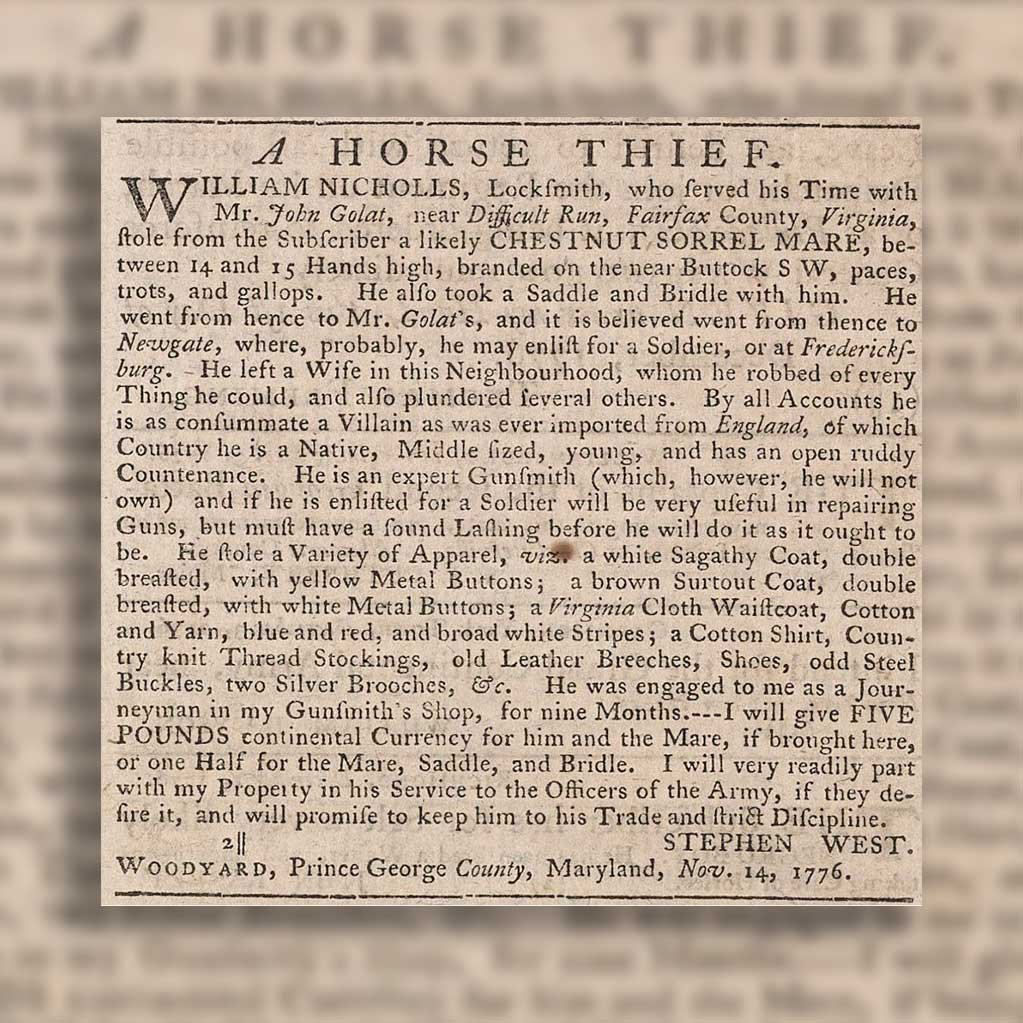
A Horse Thief
Some horse owners were certain their property had been stolen. In 1776, Stephen West used the newspaper to accuse William Nicholls of committing many crimes, including leaving his apprenticeship and robbing and abandoning “a Wife.” But the top of his notice leveled the most serious charge: “A Horse Thief.”
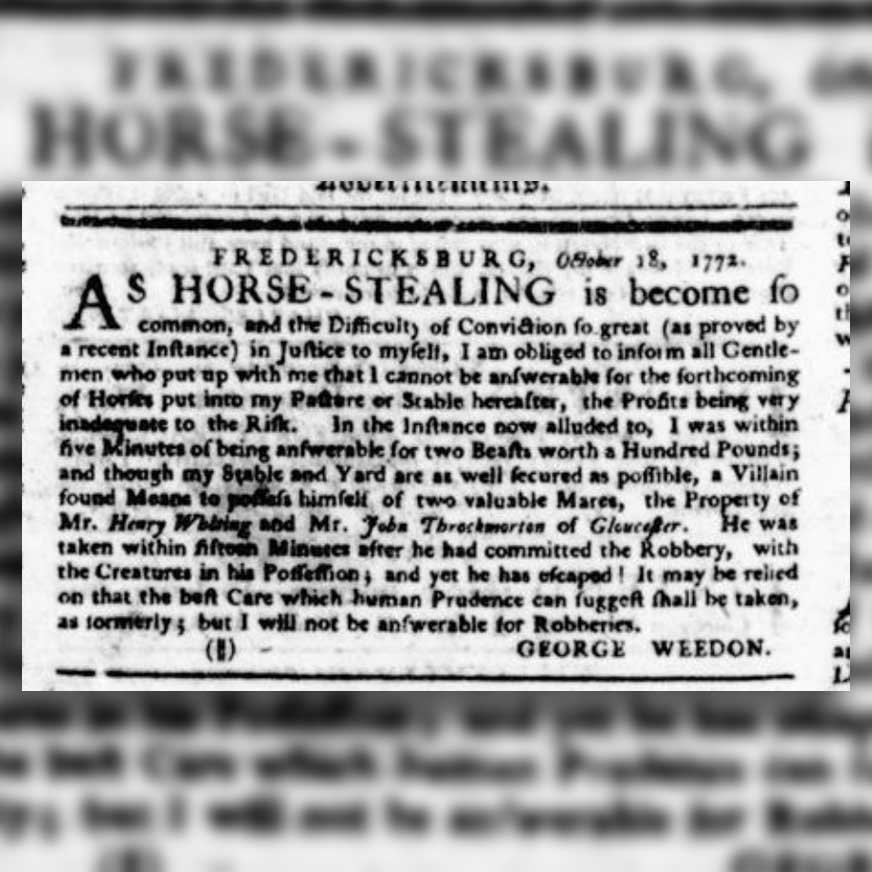
Horse Stealing
Horse theft was a problem not only for their owners, but also for those who sheltered others’ horses. George Weedon announced in 1772 that “Horse-Stealing is become so common” that he would renounce all liability for horses stolen from his pasture or stable.
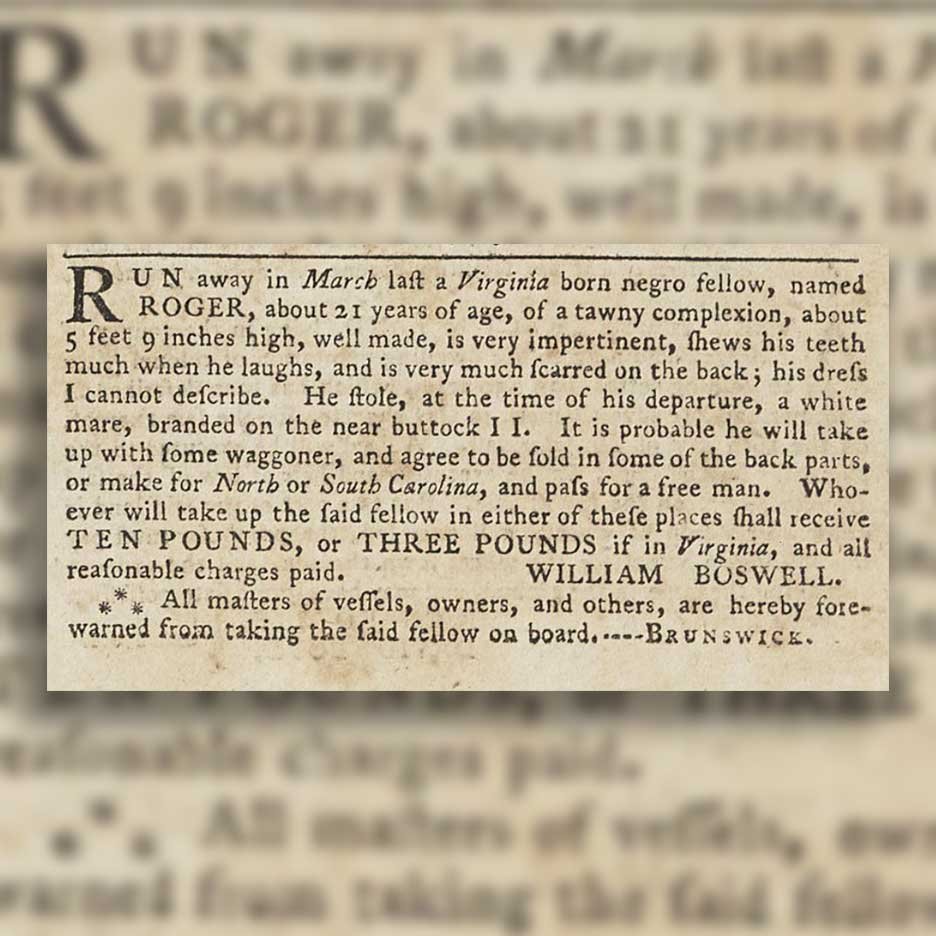
Slavery and Horse Theft
According to Virginia’s 1705 slave code, enslaved people were not permitted to own horses. Those who escaped bondage often took a horse owned by their enslaver, allowing them to cover more ground.
Meet Frido
Meet Frido, one of Colonial Williamsburg’s horses and a 2-time world champion!
Status Symbols
For Virginians, horses were a practical necessity, but they were much more than that. Hugh Jones commented that “almost every ordinary Person keeps a Horse” in Virginia, and it was common for them to spend a morning wandering for miles trying to find their horse in the woods, “only to ride two or three Miles to Church, to the Court-House, or to a Horse-Race.”11 One Virginia planter recalled hearing Indigenous observers mock the English for laziness, since they would saddle up just to visit their neighbors.12
Virginians, of all ranks and denominations, are excessively fond of horses.
— John Ferdinand Dalziel Smyth (1769)
As these anecdotes suggest, to Virginians, horses were not only beasts of burden but also symbols of their status. A gentleman signaled his wealth with a beautiful coach, several enslaved attendants, and most of all with beautiful horses. Virginia Governor Lord Botetourt traveled around town in an ostentatious coach drawn by six grey horses in silver harnesses.13 Gentlemen displayed their fortune with their horses and vehicles, much as they do with expensive cars today.
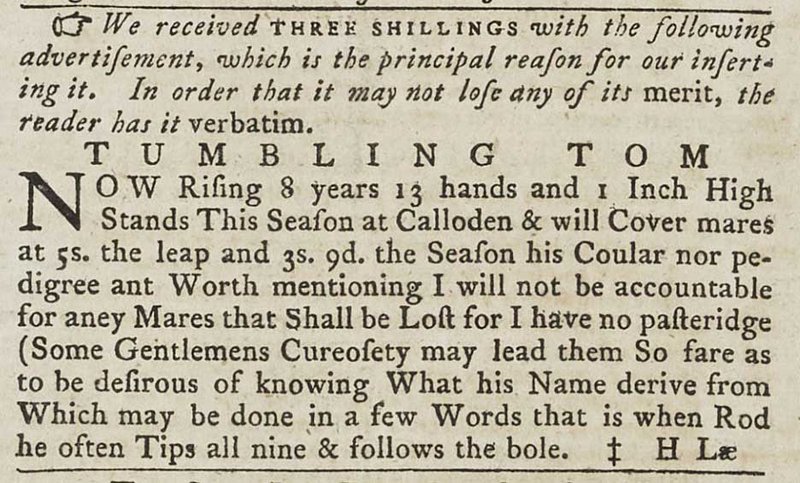
This anonymous notice in the Virginia Gazette satirizes the Virginia elite’s obsession with breeding, offering a comically unattractive stallion named Tumbling Tom, who is a poor racer, small, and without a pedigree—but, at least, cheaper than many others. Virginia Gazette (Rind), June 23, 1774.
Racing and Breeding
Virginia’s eighteenth-century gentry class competed over who had the fastest and most attractive horses.14 Obsessed with breeding, they paid massive sums to import prized English racehorses, and to breed their own horses with stallions who had impressive pedigrees.15 Philip Fithian, a New Jersey-born diarist who often remarked on Virginians’ oddities, complained once about being bored at a gentry dinner table listening to the men go on and on about “the Excellence of each others Colts—Concerning their Fathers, Mothers… Brothers, Sisters, Uncles, Aunts, Nephews, Nieces, & Cousins to the fourth Degree!” He wrote that he wanted to hear more from a young lady sitting across from him during a dinner, but “anything she attempted to say was drowned in the more polite & useful Jargon about Dogs & Horses.”16 His reference to “polite & useful Jargon” was presumably sarcastic.
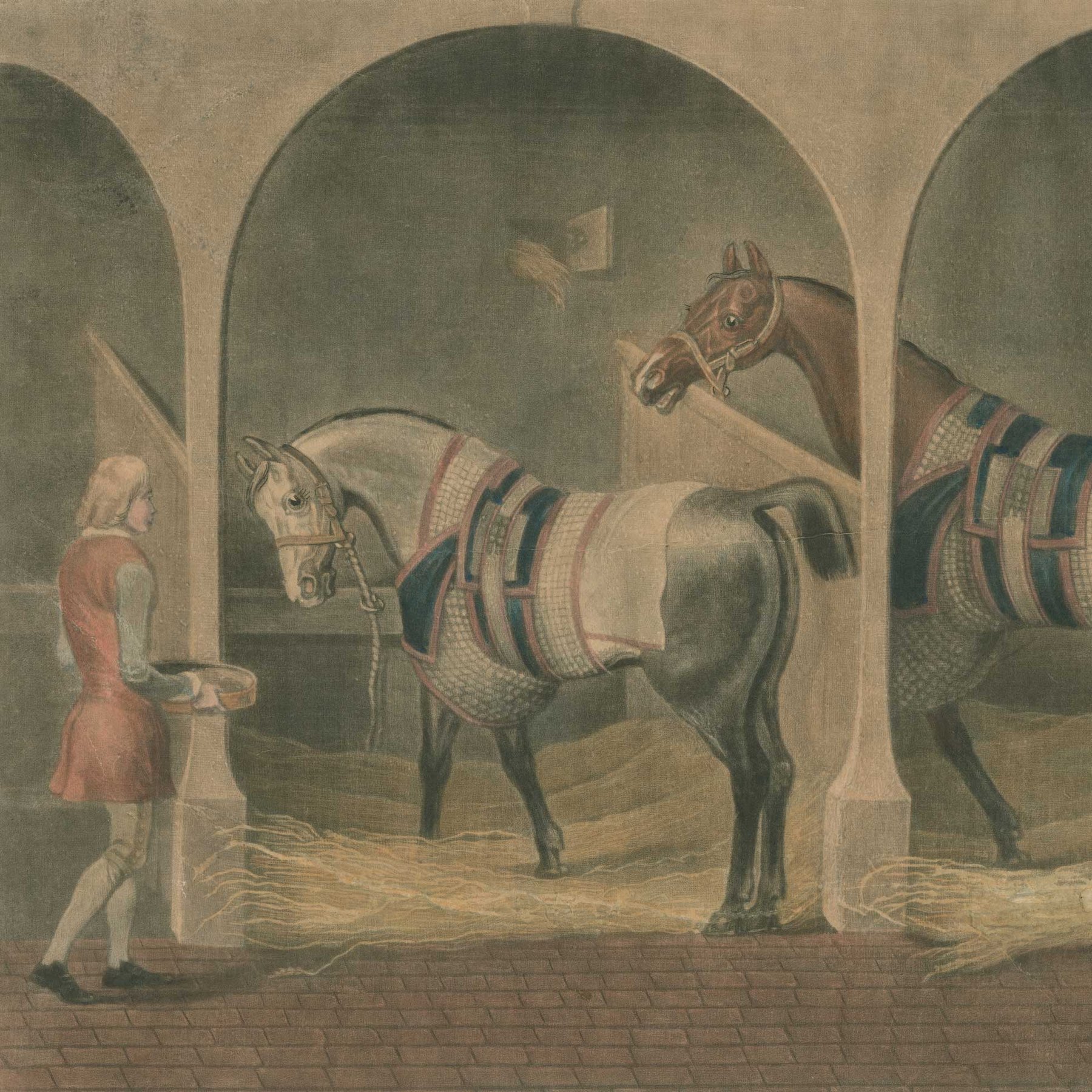
Virginia Horse Celebrities
Some of early Virginia’s most famous residents weren’t humans. The names of some horses would have been as well known to many Virginians as the names of Jefferson or Washington. Who were these equine celebrities?

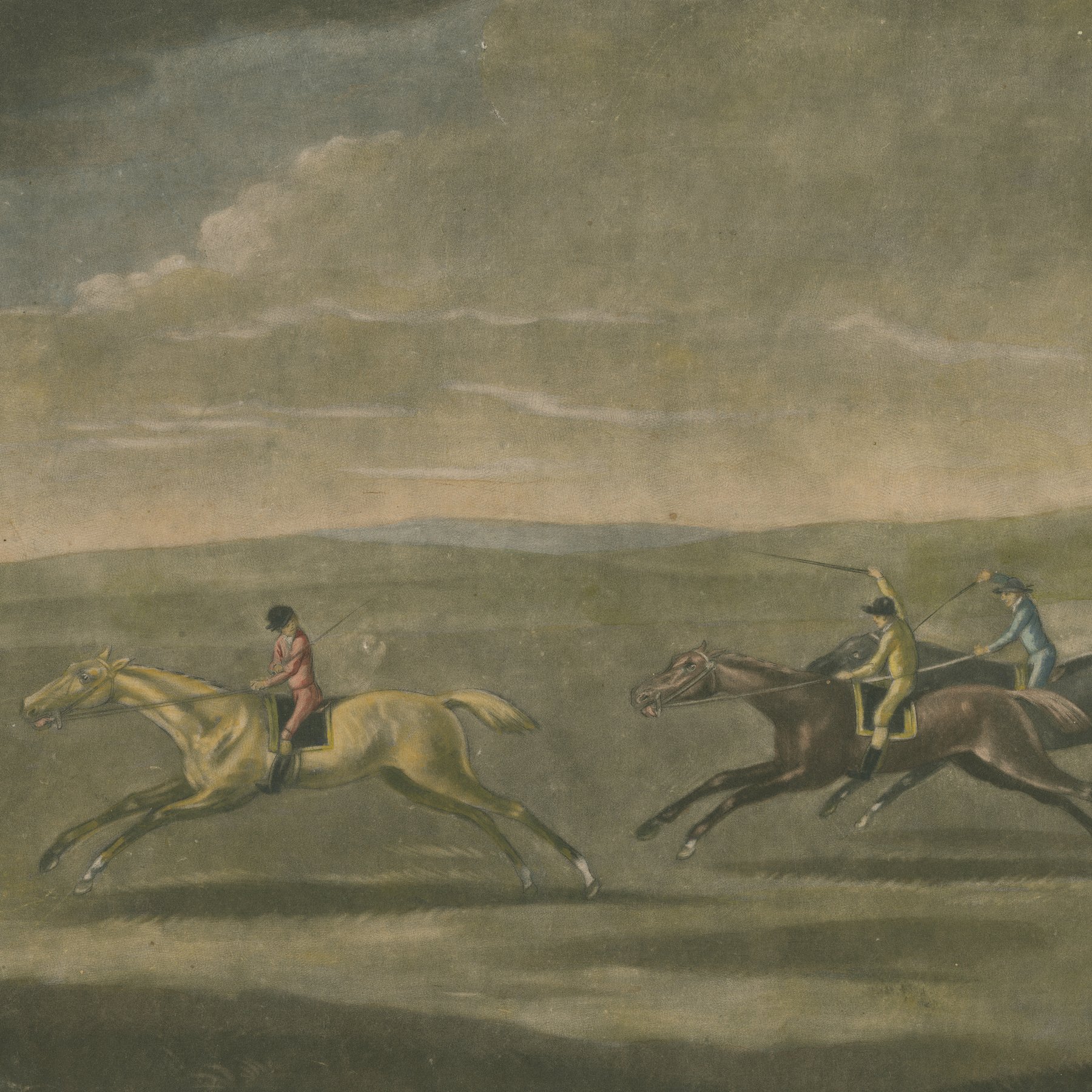
Bulle Rock
Likely the first horse with a Thoroughbred pedigree to be imported into Virginia, Bulle Rock was among the first racehorses and stallions to attract widespread attention among Virginians. Image: Richard Houston, “A Race over the Beacon Course at Newmarket” (London, 1770).
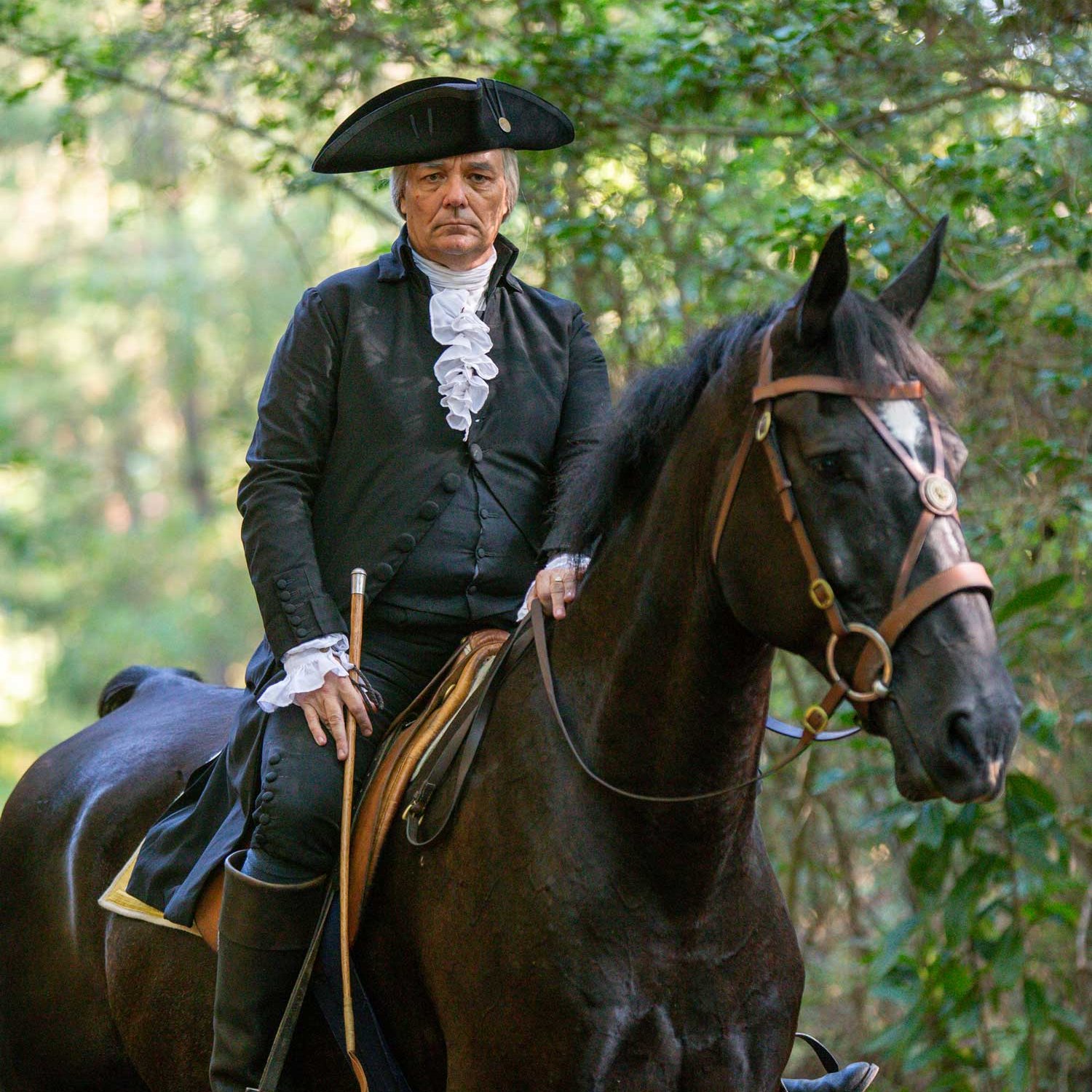
Nelson
In 1778, Virginian Thomas Nelson gifted George Washington the horse, named Nelson, whom the general would ride throughout the Revolutionary War. Washington rode Nelson as he received the surrender of Lord Cornwallis at Yorktown. Washington retired Nelson after the war, leaving him to enjoy his remaining years in peace.
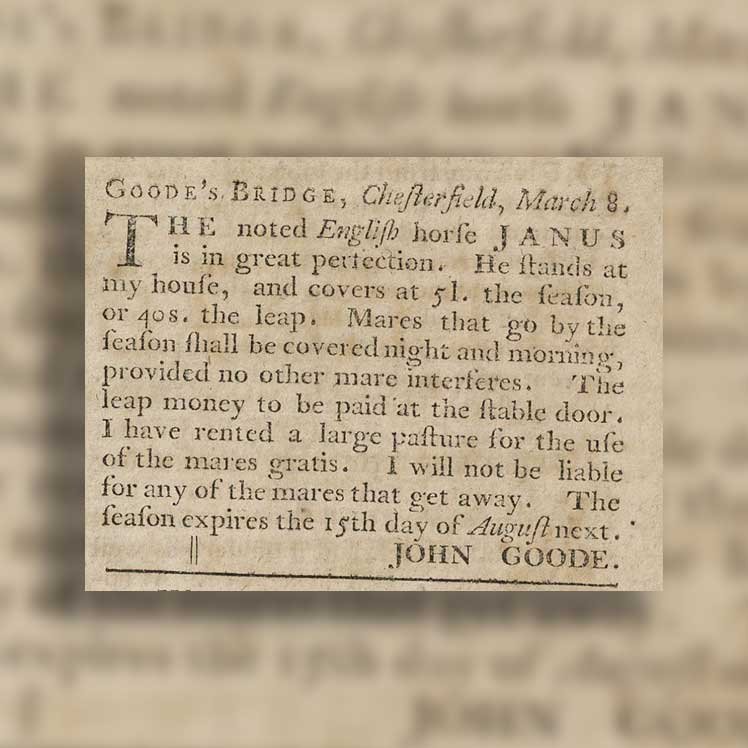
Janus
Born in England, the chestnut Thoroughbred Janus was an unspectacular racer, but became a prolific breeder and the progenitor of the American Quarter Horse breed. Janus was so famous that newspaper ads often referred “Janus mares,” a shorthand for horses with genetic ties to this famous animal.
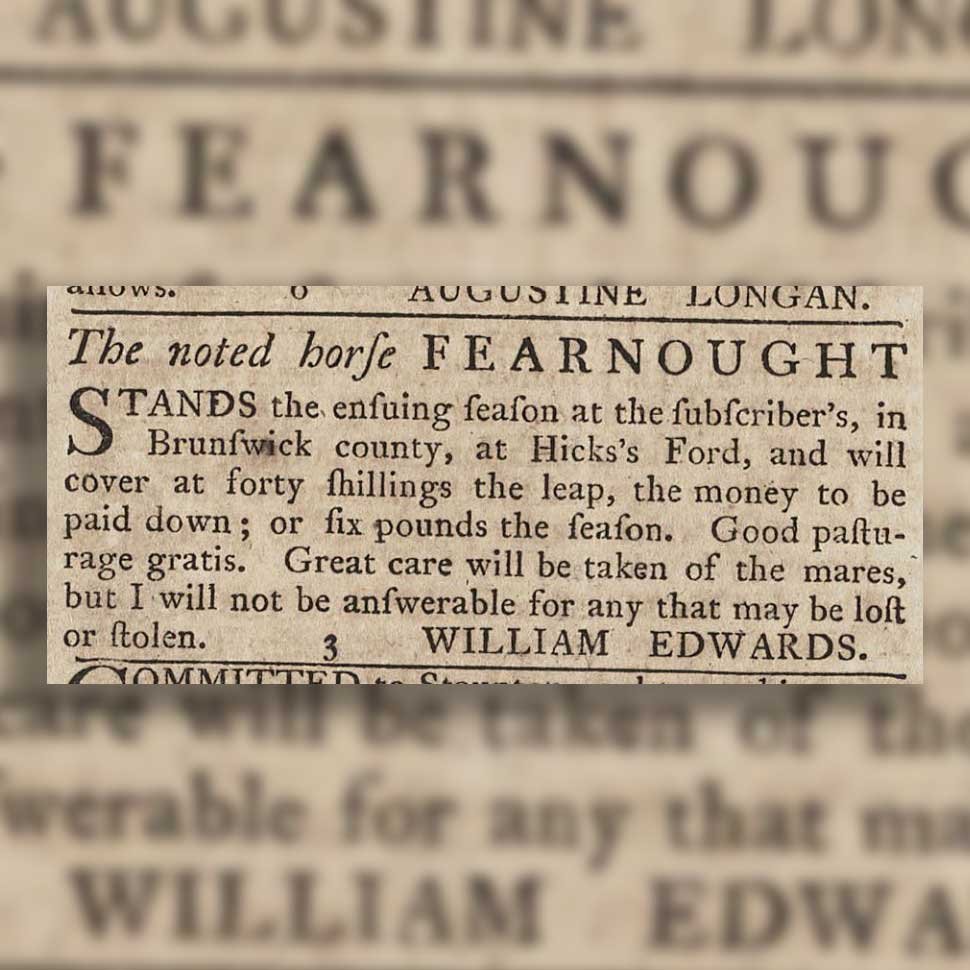
Fearnought
Fearnought was a champion racer in England and an unusually large, quick horse. Virginia breeder John Baylor paid the staggering sum of £1,000 to import Fearnought. From 1764 to his death in 1776, Fearnought was the most highly regarded breeding stallion in Virginia. Many of his offspring became champion racers.
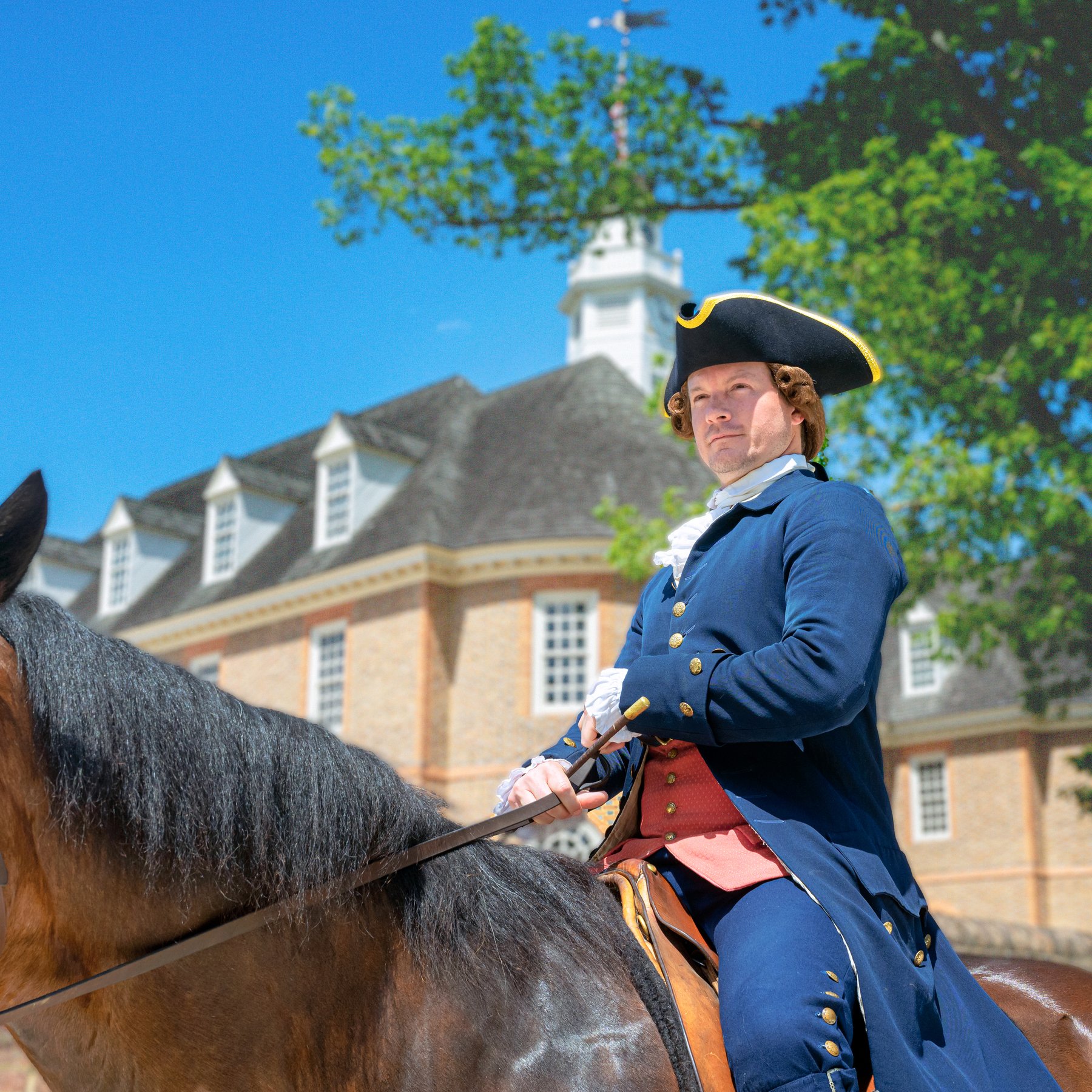
Caractacus
A descendant of Fearnought, Caractacus was Thomas Jefferson’s favorite riding horse. One overseer remembered that Jefferson “would not ride or drive anything but a highbred horse.”(17) On Caractacus, Jefferson narrowly escaped an approaching British army in 1781.
In this intensely competitive environment, horses and members of the gentry proved themselves at the racetrack. Virginians of all ranks gathered at the track on Saturday mornings to watch these contests. Depending on the terms agreed to, these races could be violent, as owners or jockeys fought for every advantage with elbows, feet, and whips.18 Members of the gentry often placed eye-watering wagers, which were witnessed, documented, and treated as legal contracts.19
Along with Fredericksburg, Williamsburg was one of the centers of horse racing in Virginia. Major horse racing events usually accompanied the “Publick Times” in April and October, when Williamsburg swelled with lawmakers, litigants, and merchants for the opening of the courts and the House of Burgesses.20 In 1774, the Continental Association (an agreement by Patriot colonists to limit certain kinds of economic activities for political reasons) prohibited engaging in “all Horse-racing.”21 Shortly thereafter, an advertisement in the Virginia Gazette announced that because of the Continental Congress’s resolutions, the Jockey Club in Dumfries had decided to postpone its upcoming races.22 After the war, though, horseracing returned to favor, and remained a popular pastime through the nineteenth century.
Horses from Above
Aerial View of CW Horses
Relax and enjoy these summer morning moments of several of the Colonial Williamsburg horses as they graze on grass at the Basset Hall pastures.
Rare Breeds
Founded in 1986, Colonial Williamsburg’s Rare Breeds program helps promote genetic diversity in livestock that research shows thrived in 18th-century colonial British America.
Sources
- Julie A. Campbell, The Horse in Virginia: An Illustrated History (University of Virginia Press, 2010), 17.
- William J. Hinke, trans., “Report of the Journey of Francis Louis Michel from Berne, Switzerland, to Virginia, October 2, 1701–December 1, 1702,” Virginia Magazine of History and Biography 24 (Jan. 1916): 36.
- Michael K. Nicholls, “Aspects of the African American Experience in Eighteenth-Century Williamsburg and Norfolk,” (Colonial Williamsburg Research Report, 1991), 40.
- Kathleen M. Brown, Good Wives, Nasty Wenches, and Anxious Patriarchs: Gender, Race, and Power in Colonial Virginia (Omohundro Institute of Early American History and Culture, 1996), 274–76.
- See Carl Bridenbaugh, Cities in the Wilderness: The First Century of Urban Life in America, 1625–1742 (Capricorn Books, 1955), 91–92; John Duffy, The Sanitarians: A History of American Public Health (University of Illinois Press, 1990), 13–14.
- The Maryland Historical Society holds an example of a woman’s patten.
- Hugh Jones, The Present State of Virginia (Joseph Sabin, 1865), 49.
- Ebenezer Hazard, “The Journal of Ebenezer Hazard in Virginia, 1777,” ed. Fred Shelley, Virginia Magazine of History and Biography 62 (Oct. 1954): 405.
- Andrew Burnaby, Travels through the Middle Settlements in North-America: In the Years 1759 and 1760 (London: T. Payne, 1775), 53; William Hugh Grove, “Virginia in 1732: The Travel Journal of William Hugh Grove,” Virginia Magazine of History and Biography 85 (Jan. 1977): 44.
- Jenna Kay Carlson Dietmeier, “Beyond the Butcher’s Block: The Animal Landscapes of Eighteenth-Century Chesapeake and Lowcountry Plantations,” (Ph.D. diss., College of William & Mary, 2017), 53–54.
- Hugh Jones, The Present State of Virginia (Joseph Sabin, 1865), 49.g
- Campbell, Horse in Virginia, 20.
- Botetourt’s estate inventory in 1770 listed “5 Grey Coach Horses, & 1 Mare.” See An Inventory of the Contents of the Governor’s Palace Taken after the Death of Lord Botetourt (The Colonial Williamsburg Foundation, 1981), 12, link.
- T. H. Breen, “Horses and Gentlemen: The Cultural Significance of Gambling among the Gentry of Virginia,” William and Mary Quarterly 34 (April 1977): 240–47.
- Campbell, Horse in Virginia, 21–27.
- Philip Vickers Fithian, Journal and Letters, 1767–1774, ed. John Rogers Williams (Princeton University Library, 1900), 236, link.
- Campbell, Horse in Virginia, 35.
- Rhys Isaac, The Transformation of Virginia, 1740–1790 (Omohundro Institute of Early American History and Culture, 1982), 99.
- Breen, “Horses and Gentlemen,” 250–53.
- Mary R. M. Goodwin, “Eighteenth Century Fairs,” Colonial Williamsburg Digital Library (1955), p. 28, 31, link.
- Isaac, Transformation of Virginia, 247–50; “Continental Association, 20 October 1774,” Founders Online, National Archives, https://founders.archives.gov/documents/Jefferson/01-01-02-0094.
- Virginia Gazette (Purdie and Dixon), Nov. 24, 1774, p. 3, link.